
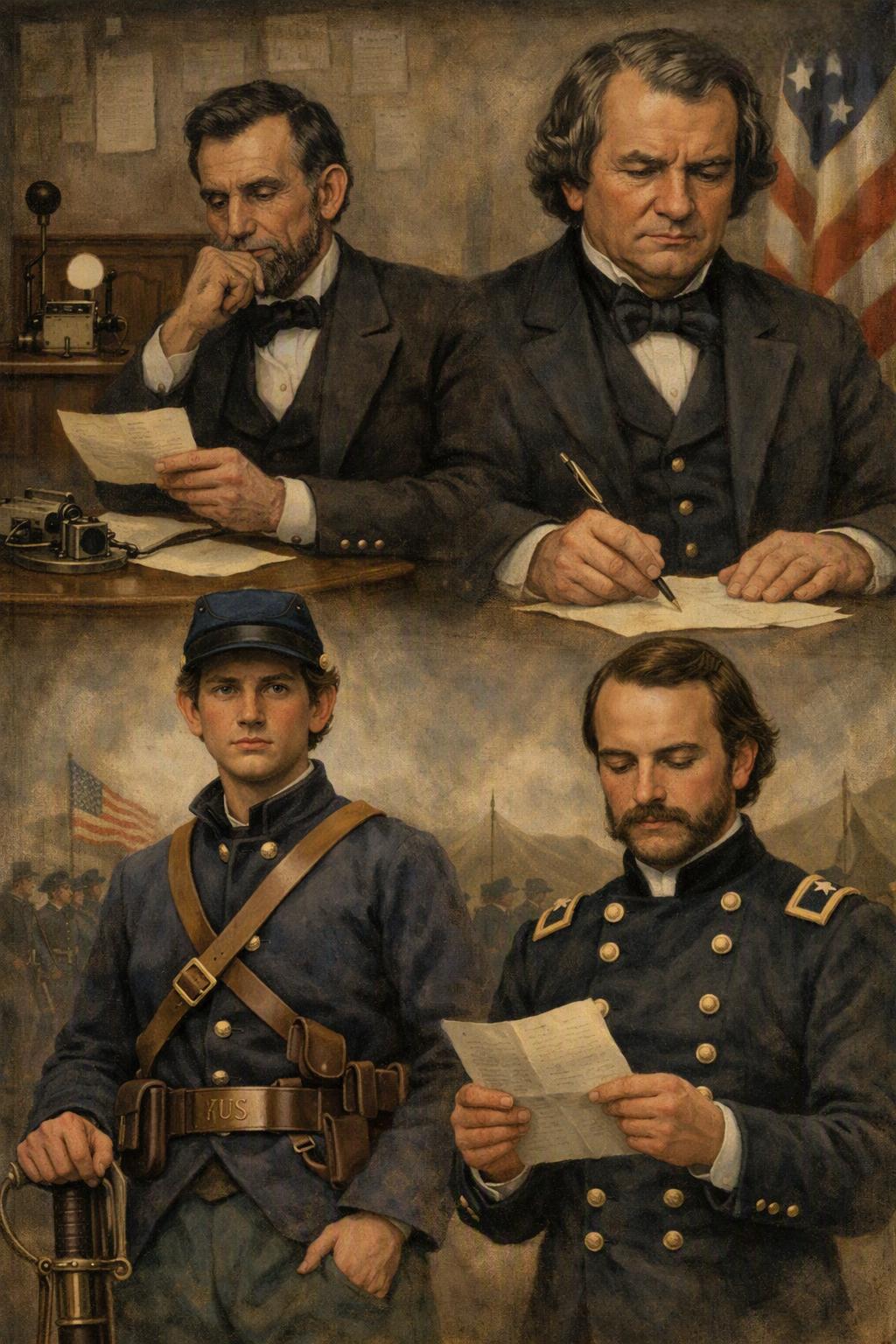
In the late summer of 1864, a case from war‑torn Tennessee reached Abraham Lincoln’s desk — the kind of case that exposed the human cost of a conflict fought not only on battlefields, but inside fractured communities. The defendant was Private Patrick Jones, a 15‑year‑old soldier in the 12th Tennessee Cavalry (Union), one of the regiments raised from Southern Unionists in a state ripped apart by guerrilla warfare and divided loyalties.
Jones was not a hardened killer. He was a teenage cavalryman serving in one of the most unstable environments of the war — a region where discipline was fragile, alcohol was common, and violence often erupted inside the ranks. One night, drunk and volatile, Jones got into a fight with Private William A. Hall, another enlisted man in his own regiment. The confrontation escalated, tempers snapped, and Jones shot and killed Hall. It was not premeditated murder — it was a reckless, drunken act committed in the chaos of a regiment struggling to control its own men.
A military court sentenced Jones to hang.
But Tennessee’s Military Governor, Andrew Johnson, saw the case differently. Johnson — still serving as Military Governor even as he had just been chosen as Lincoln’s Vice‑Presidential running mate — telegraphed Lincoln on August 19 with a blunt assessment: Jones had been “drunk” at the time of the killing, swept up in the disorder that plagued Unionist Tennessee. Johnson believed the boy was guilty, but not deserving of death.
His message to Lincoln was strikingly candid:
“The moral influence would be much greater if we could hang some of the larger fish… There is no trouble in convicting & hanging the little helpless minnows which makes & leaves no impression upon the public mind.”
For Johnson, execution was a tool of public deterrence, not just punishment. Hanging a low-ranking soldier for a drunken camp brawl would do nothing to pacify Tennessee; the real threat came from the influential local leaders and guerrilla commanders driving the rebellion
On August 20, 1864, Lincoln agreed. He telegraphed Brigadier General John F. Miller and suspended the execution, saving Jones’s life with a single sentence.
After that moment, Patrick Jones disappears from the record — one of the countless young soldiers whose lives flicker briefly in the archives and then vanish. But the case endures because it reveals Lincoln’s wartime moral compass: justice should be firm, but never mindless; mercy should be extended when punishment serves no purpose; and the Union should not become a machine that crushes “little helpless minnows” while ignoring the “larger fish” who preyed upon them.
And for Andrew Johnson, the moment foreshadowed his own rise. Within eight months, the hard‑edged military governor who defended a teenage private would become Vice President of the United States, and soon after — through tragedy — President.
