
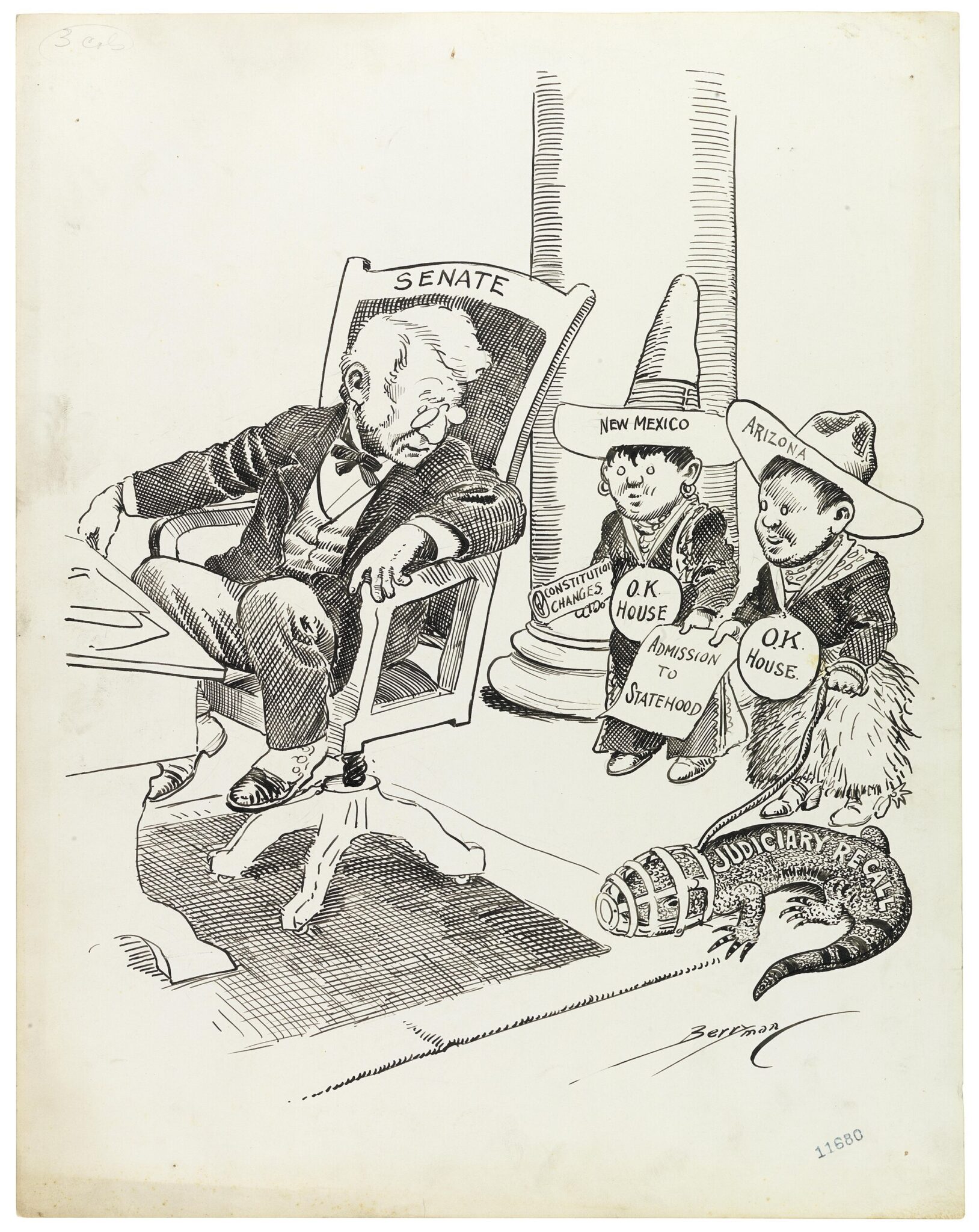
Approved, but not yet admitted. On August 8, 1911, the U.S. Senate voted 53–18 to approve statehood for Arizona and New Mexico. Yet both territories remained in political limbo until 1912, as constitutional concerns—especially Arizona’s provision for judicial recall—prompted a presidential veto and delayed admission. New Mexico entered the Union on January 6; Arizona followed on February 14.
The overwhelming Senate vote on August 8th exposed a fierce, high-stakes ideological clash over the growing Progressive movement that was actively reshaping American politics. The primary roadblock centered on Arizona’s radical, newly drafted state constitution, which allowed ordinary citizens to remove corrupt judges from office through a popular recall vote. President William Howard Taft, a strict legal traditionalist, viewed this provision as a dangerous, populist attack on the absolute independence of the American judiciary, prompting him to issue a stinging presidential veto that blocked both territories from entering the Union.
To bypass Taft’s executive roadblock, the citizens of Arizona agreed to a clever political compromise: they voted to remove the controversial judicial recall clause from their constitution just long enough to secure statehood, only to defiantly vote it right back in the very first election after being officially admitted to the Union. This high-stakes legal maneuvering turned the admission of the 47th and 48th states into a defining national debate over the limits of direct democracy and the power of the federal government to dictate local laws.
Image: Clifford K. Berryman’s 1911 political cartoon titled “Admission to Statehood” via Wikimedia Commons, public domain
