
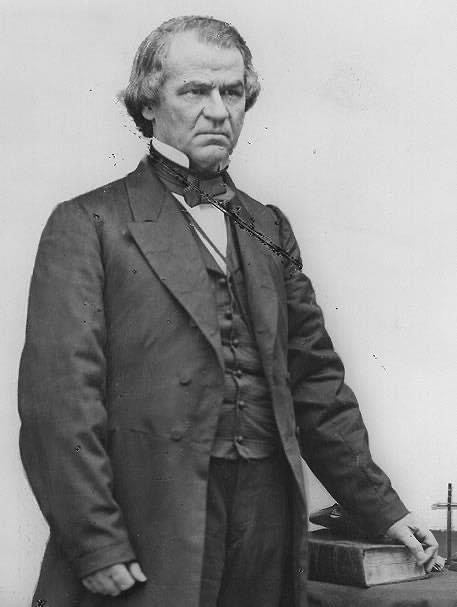
On August 20, 1866, President Andrew Johnson issued Proclamation 157, formally declaring the Civil War at an end:
“…the said insurrection is at an end, and that peace, order, and tranquility, and civil authority now exist in and throughout the whole United States of America.”
Although Confederate armies had surrendered more than a year earlier, Texas remained under martial law, and federal authority across the South was still in flux. Johnson’s proclamation attempted to rapidly restore civil governance and accelerate the readmission of Southern states—without the protections for freedmen demanded by Radical Republicans. The document effectively shifted the nation’s struggle from the battlefield to the halls of Congress, igniting the fierce political conflict that defined Reconstruction.
Image via Wikimedia Commons, public domain
