
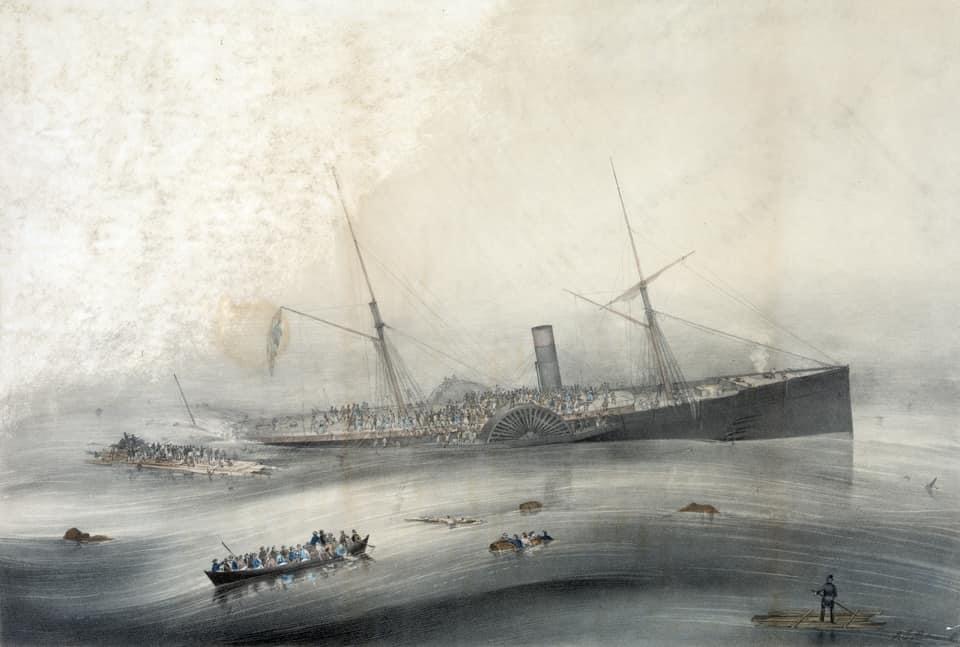
On September 27, 1854, the luxury paddle steamer SS Arctic collided with the smaller French iron-hulled vessel Vesta in dense fog off Newfoundland.
Believing the much larger wooden-hulled Arctic had escaped serious damage, Captain James C. Luce initially continued toward land. But the collision had torn open the ship below the waterline, and seawater soon began flooding the vessel beyond control.
As panic spread, order collapsed. With too few lifeboats for everyone aboard, many crew members and able-bodied male passengers seized places for themselves, leaving most women, children, and other passengers behind. Although some individual acts of courage occurred, the disaster became notorious for the near-total failure to preserve places for women and children.
More than 300 of the roughly 400 people aboard died in the freezing North Atlantic, including the wife and two children of Edward Knight Collins, the owner of the Collins Line. The Arctic disaster horrified the public and became one of the 19th century’s most infamous maritime tragedies—an enduring warning about inadequate lifeboat capacity, poor emergency procedures, and the consequences of panic at sea.
Image via Wikimedia Commons; no known copyright restrictions.
