
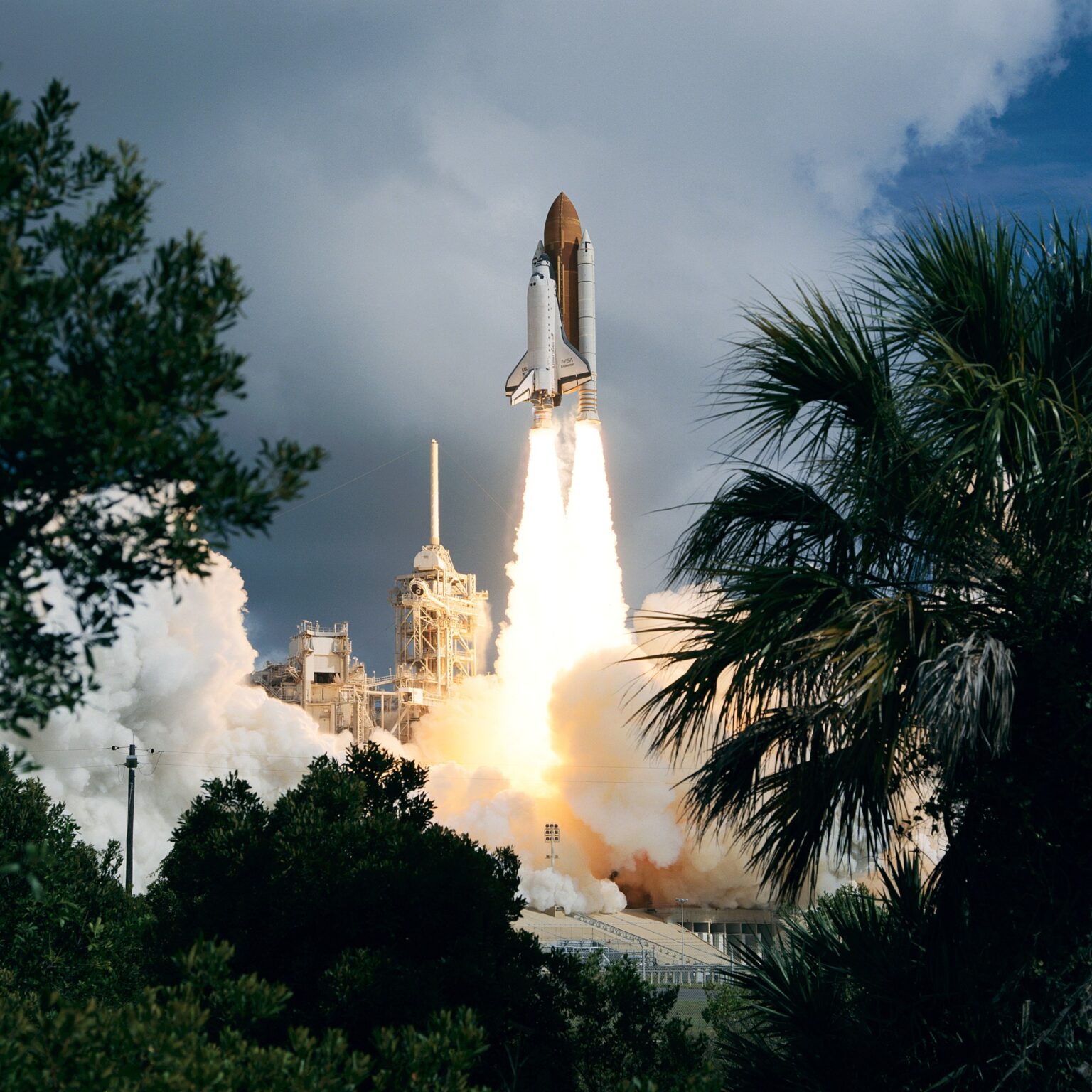
On June 21, 1993, Space Shuttle Endeavour roared off the pad from Kennedy Space Center, marking the historic launch of mission STS-57. This flight successfully debuted the SPACEHAB module a commercial, pressurized laboratory that dramatically expanded the shuttle’s payload bay cargo capacity for cutting-edge microgravity research.
Over the course of a 10-day orbital mission, the highly skilled six-member crew executed a demanding schedule, which included a nearly six-hour spacewalk to safely capture and stow a drifting European science satellite named EURECA. Inside the pristine environment of the new SPACEHAB module, the astronauts conducted dozens of complex experiments in life sciences and materials processing. The mission proved that commercial modules could seamlessly plug into the shuttle system, laying the foundational engineering groundwork for the future construction of the International Space Station.
Image via Wikimedia Commons, public domain