
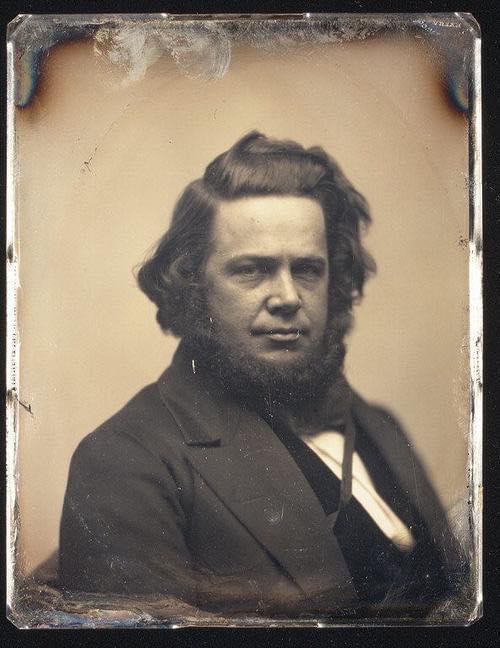
Elias Howe Jr. was born on July 9, 1819, in Spencer, Massachusetts, and went on to pioneer the basic concepts used in modern sewing machines. During the brutal winter of 1844 and 1845, Howe labored relentlessly in his workshop, guided by an intense imagination that allowed him to picture mechanical parts joining together seamlessly. By April of 1845, his advanced stitch-forming mechanism was sewing smoothly, and by July, he completed a model that sewed strong suits of clothes for himself and his financial partner. While later inventors added improvements, no modern sewing machine functions without utilizing Howe’s original lockstitch design.
The critical breakthrough that allowed Howe to succeed where others failed reportedly came from a vivid nightmare. He dreamed he was captured by a tribal king in a strange land and given twenty-four hours to finish a sewing machine or face execution. In the dream, as the king’s warriors surrounded him with spears, Howe noticed that each spearhead had an eye-shaped hole near its tip. Upon waking, he realized that placing the thread hole at the point of the needle, rather than the middle or the end, was the exact mechanical secret he needed.
