
On October 3, 1789, President George Washington issued the young republic’s first presidential Thanksgiving proclamation. At the request of both houses of Congress, Washington designated Thursday, November 26, 1789, as a day of public thanksgiving and prayer. The proclamation called Americans to give thanks for, among other blessings, the opportunity “peaceably to establish a form of government for their safety and happiness.”
Exactly seventy-four years later, on October 3, 1863, amid the crisis of the Civil War, President Abraham Lincoln issued his own landmark Thanksgiving proclamation. Influenced in part by the long-running campaign of writer and editor Sarah Josepha Hale, Lincoln invited Americans to observe the last Thursday of November as a national day of “Thanksgiving and Praise.” The proclamation helped establish the annual presidential Thanksgiving tradition that continued thereafter.
The symmetry was remarkable: in 1863, the last Thursday of November fell on November 26—the same calendar date Washington had selected in 1789. Washington’s proclamation celebrated the peaceful founding of a constitutional government; Lincoln’s asked a nation at war to recognize its blessings, mourn its losses, and seek peace, harmony, and the restoration of the Union. Lincoln specifically urged Americans to remember those who had suffered in the conflict and to offer prayers for “the full enjoyment of peace, harmony, tranquillity and Union.”
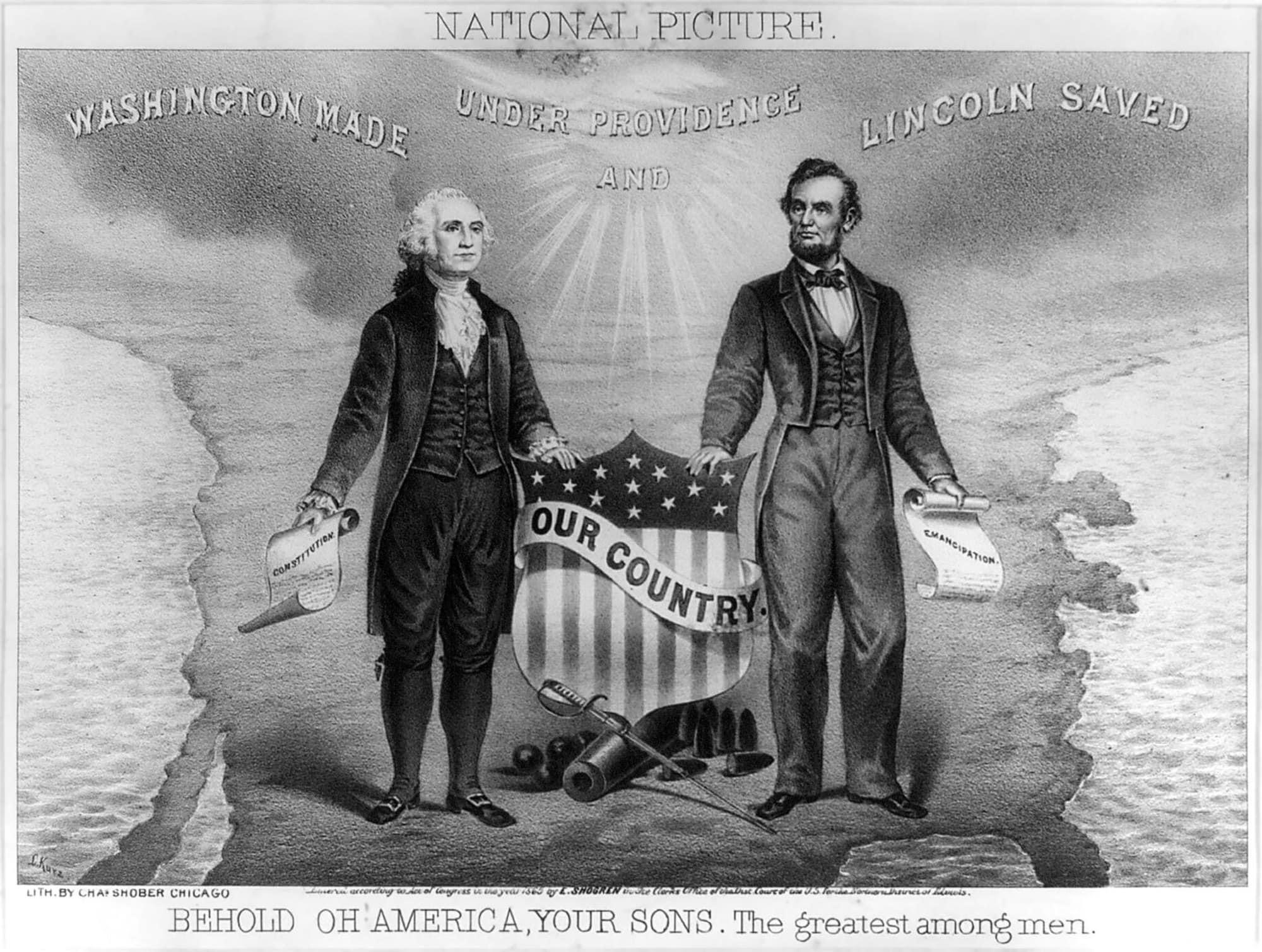
Image credit: “Behold Oh America, Your Sons. The greatest among men,” allegorical lithograph, via Wikimedia Commons, public domain.
