
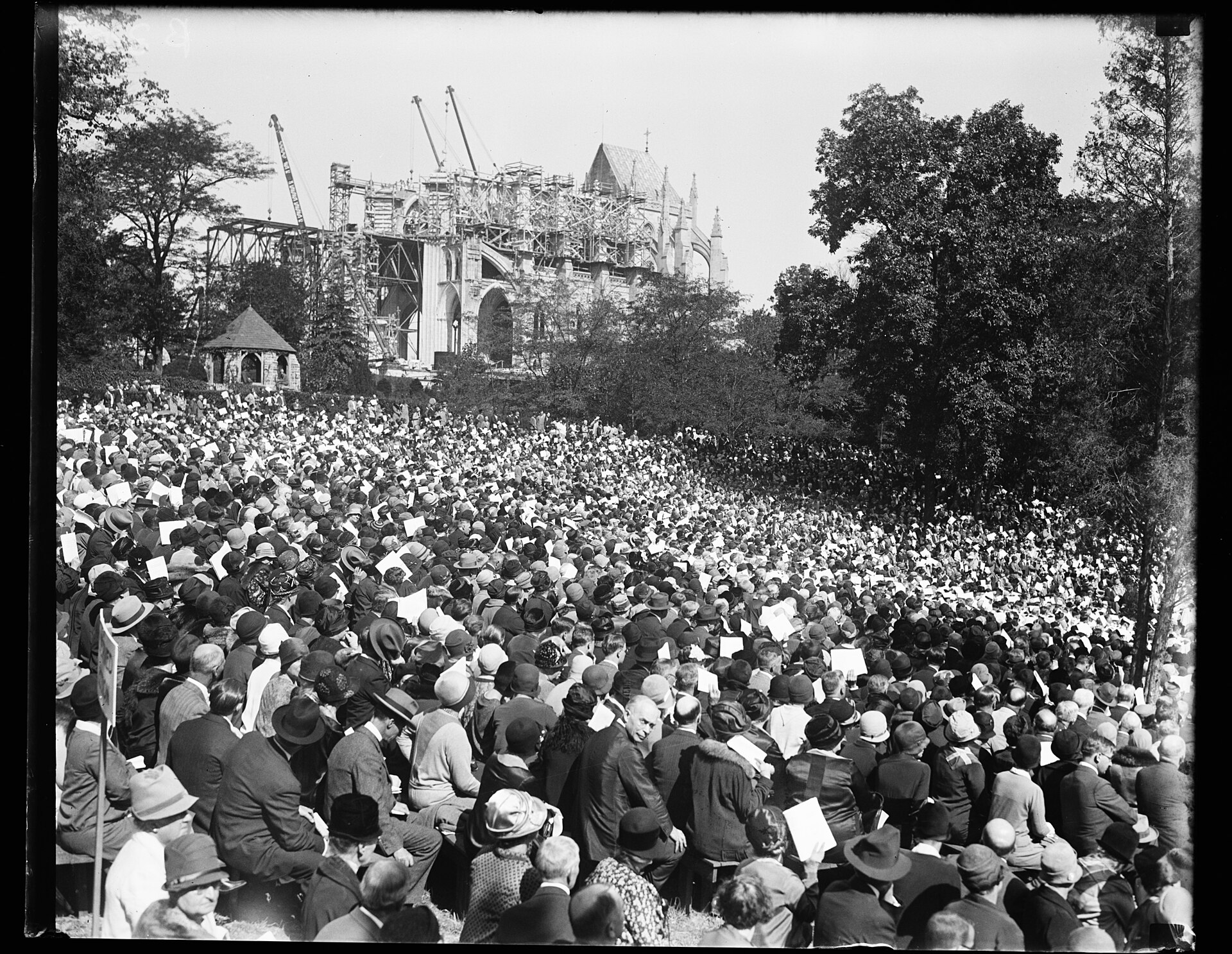
On September 29, 1907, President Theodore Roosevelt helped begin one of Washington, D.C.’s most ambitious architectural projects when he laid the foundation stone for Washington National Cathedral. The ceremony, held before a crowd of thousands on Mount Saint Alban, marked the formal start of a project that would take 83 years to complete.
Officially known as the Cathedral Church of Saint Peter and Saint Paul, Washington National Cathedral was envisioned as a national house of prayer and a gathering place for worship, remembrance, and civic occasions. Its architects embraced the Gothic tradition, creating a structure defined by pointed arches, ribbed vaults, flying buttresses, soaring towers, and richly carved stonework.
Built primarily of Indiana limestone, the cathedral required the work of generations of architects, stonecutters, sculptors, glaziers, engineers, clergy, and donors. Construction continued in stages through much of the twentieth century, reflecting both the persistence of its builders and the enduring appeal of medieval-inspired craftsmanship in the modern capital.
The completed cathedral was dedicated on September 29, 1990—exactly 83 years after the cornerstone ceremony. Today, it stands as one of the world’s largest Gothic cathedrals and a remarkable record of American craftsmanship, religious life, and civic history. The Cathedral notes that its architecture includes 112 gargoyles and 215 stained-glass windows, illustrating the vast scale of its artistic detail.
