
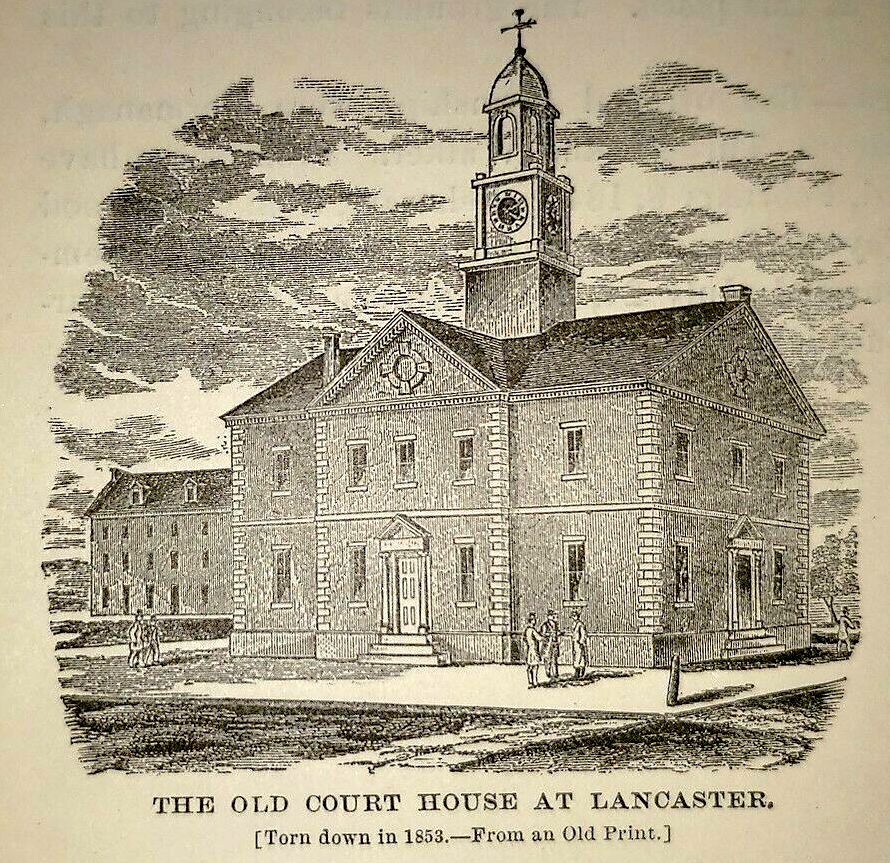
On September 27, 1777, Lancaster, Pennsylvania, briefly became the seat of the United States’ revolutionary government when the Second Continental Congress met there for a single day. After the British victory at the Battle of Brandywine exposed Philadelphia to attack, Congress left the city on September 18. It had previously designated Lancaster as its fallback meeting place if evacuation became necessary.
Delegates generally arrived in Lancaster on September 26 and convened the next day in the original Lancaster Courthouse, which stood in today’s Penn Square. Their short session focused on military business amid the British campaign in Pennsylvania.
Concluding that Lancaster was not secure enough for an extended stay, Congress adjourned to York, across the Susquehanna River, where it reconvened on September 30 and remained until June 1778. Lancaster’s one-day role is therefore best understood as a brief wartime seat of the Continental Congress—a vivid example of how mobile and precarious the revolutionary government could be.
Image from an 1876 illustrated history of Pennsylvania via Wikimedia Commons; public domain. Note for history buffs: This illustration depicts the second courthouse built on the square in 1787 and demolished in 1853. The original structure where Congress actually met in 1777 was entirely destroyed by a major fire in 1784.
