
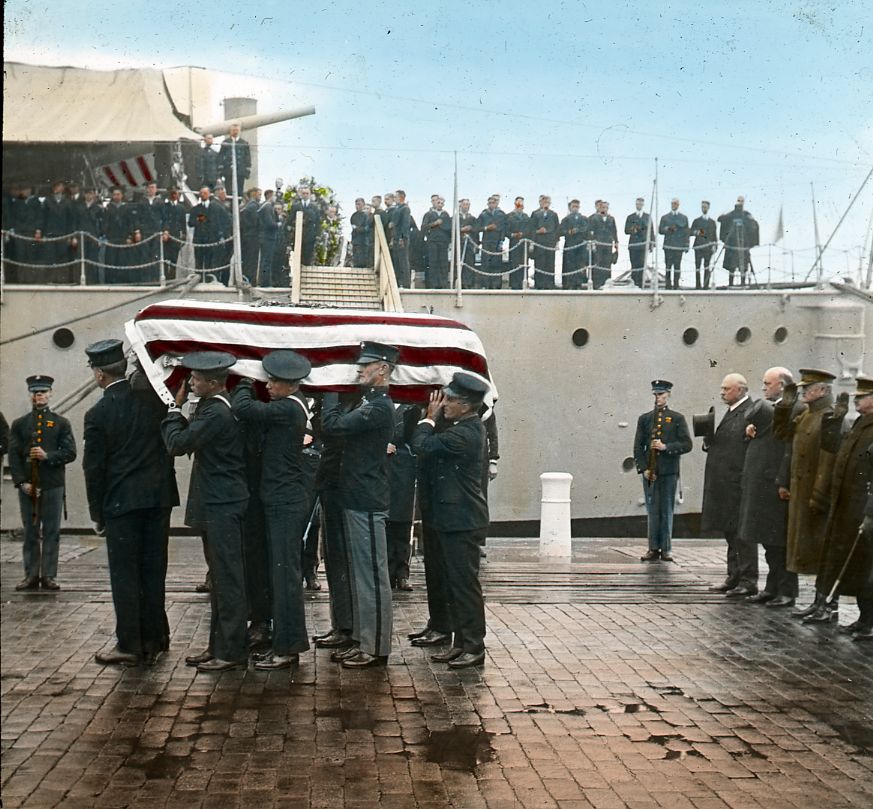
On November 9, 1921, the cruiser USS Olympia arrived at the Washington Navy Yard carrying the remains of an unidentified American soldier killed in France during World War I. Brought home for burial at Arlington National Cemetery, the Unknown would become a national symbol of sacrifice and remembrance. His arrival marked the beginning of the final ceremonies in a journey from the battlefields of France to a place of honor in the nation’s capital.
Senior military and government officials gathered to receive the casket, including Secretary of War John W. Weeks and General John J. Pershing. From the Navy Yard, the Unknown was escorted to the United States Capitol to lie in state in the Rotunda. During the public viewing on November 10, about 90,000 people came to pay their respects. The scale of that gathering gave public expression to a loss felt in households across the country: an unidentified soldier had become the focus of a nation’s mourning.
On November 11, Armistice Day, the Unknown was laid to rest at Arlington National Cemetery. The Tomb’s familiar marble sarcophagus followed in 1932, and a continuous, round-the-clock military guard began in 1937. Those later additions extended the work of remembrance begun in 1921. The arrival of the Olympia remains a powerful moment in that history—the return of one unidentified American whose burial gave the nation a lasting place to honor those whose names and resting places were unknown.
