
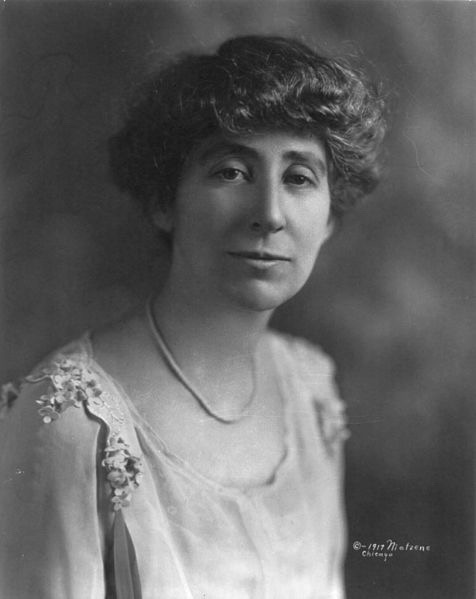
On November 7, 1916, Montana Republican Jeannette Rankin became the first woman elected to the United States Congress. Her victory came nearly four years before ratification of the Nineteenth Amendment, which prohibited denying voting rights on account of sex but left other barriers to the ballot intact. Rankin had helped lead Montana’s successful campaign for women’s suffrage in 1914, building political experience and support that contributed to her congressional victory. Reflecting on her election, she declared, “I am deeply conscious of the responsibility, and it is wonderful to have the opportunity to be the first woman to sit in Congress.”
Rankin’s first days in the House coincided with the United States’ decision to enter the First World War. Sworn in on April 2, 1917, she faced a vote on war with Germany just four days later. A committed pacifist, she resisted pressure from colleagues, family members, and suffrage leaders who feared that her opposition would damage their cause. “I want to stand by my country, but I cannot vote for war,” she told the House. “I vote no.” She was one of 50 representatives who opposed the declaration. Her decision brought fierce criticism, although letters from her constituents ran heavily against American intervention. In 1918, following a redistricting that complicated her electoral prospects, she sought a Senate seat rather than House reelection and was defeated.
Montana voters returned Rankin to the House in 1940. On December 8, 1941, the day after Japan attacked Pearl Harbor, she cast the sole congressional vote against declaring war on Japan. The House approved the resolution 388–1. As reporters and members crowded around her afterward, she took refuge in a telephone booth in the Republican cloakroom before police escorted her to her office. She did not seek reelection in 1942, but continued advocating peace, eventually leading a march against the Vietnam War in Washington in 1968. Her career joined a breakthrough in women’s political representation with an enduring controversy: how an elected representative should act when personal conscience conflicts with overwhelming demands for war.
