
On November 5, 1917, USS Alcedo (SP-166) became the first United States Navy ship sunk by enemy action during World War I. Originally a private yacht, she had been purchased and converted for wartime service, joining the vessels assigned to escort convoys off France. Her loss illustrated the dangers facing the ships and crews protecting Allied maritime traffic from German submarines.
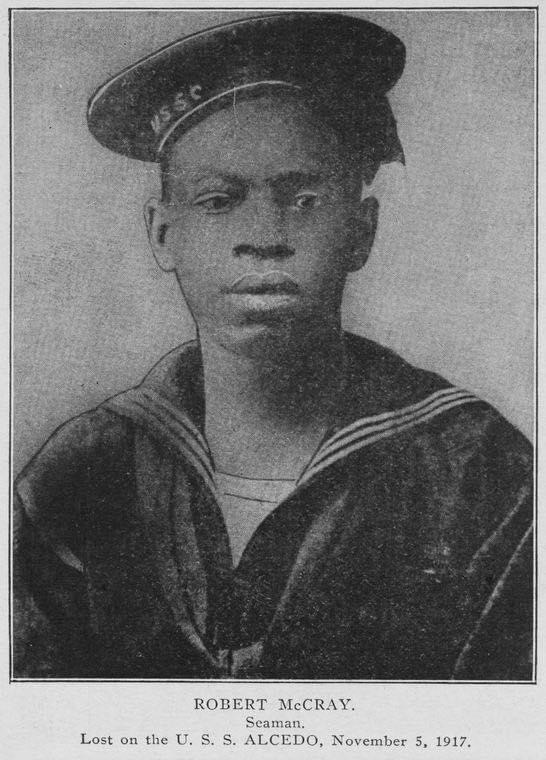
At approximately 1:45 a.m., while escorting a convoy about 75 miles west of Belle Île, Alcedo sighted a surfaced submarine roughly 300 yards off her port bow. The crew sounded general quarters, and the ship attempted to turn away, but she answered her helm too slowly to evade a torpedo fired by UC-71. It struck the port side forward, and Alcedo sank in eight minutes. One officer and twenty enlisted sailors died, including Seaman Robert McCray. Survivors escaped in boats; one group was rescued by a French torpedo boat, while another was towed to safety by French fishermen.
The sinking brought a short but active wartime career to an end. During earlier escort operations, Alcedo had helped rescue more than 200 survivors from ships struck by U-boats. Within weeks, her own crew faced the same danger. McCray’s surviving portrait gives that history an individual face, commemorating one of the sailors lost when a vessel that had carried others to safety became a casualty of the submarine war.
