
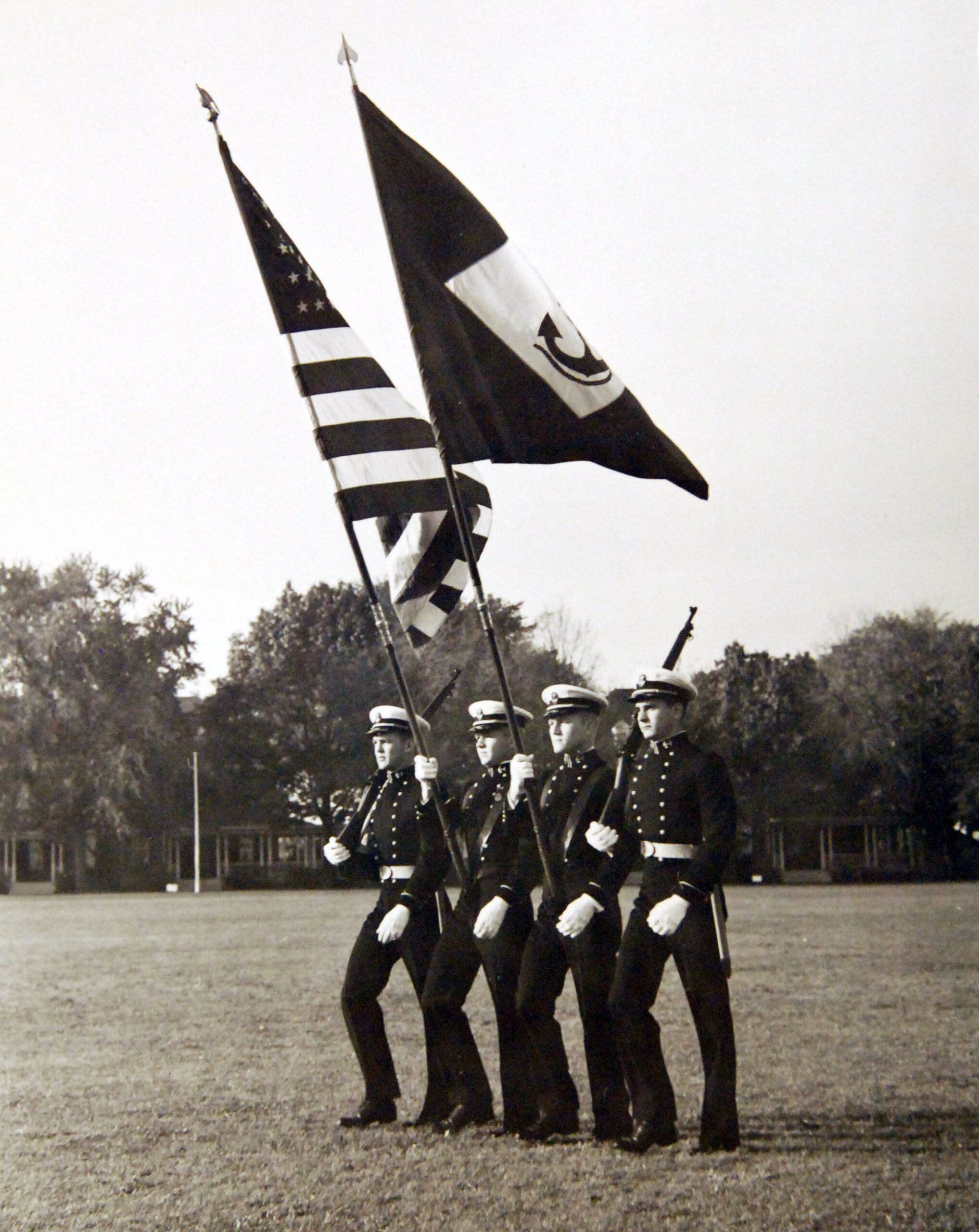
On October 31, 1942, a midshipmen color guard at the U.S. Naval Academy in Annapolis, Maryland, stood before the camera. Preserved in photographs now held by the Library of Congress, their orderly formation offers a striking contrast to the war raging across the Atlantic and Pacific. Behind the academy’s ceremonial precision, wartime demands were reshaping the education of future naval officers.
The Navy needed officers quickly. The academy’s standard four-year curriculum was compressed into three years, and classes graduated ahead of their original schedules. Although academy graduates represented only a small share of the wartime officer corps, they entered a service undergoing extraordinary expansion. The routines of study, drill, and instruction continued, but with a more urgent purpose: preparing midshipmen for responsibility at sea.
The photograph records the outward signs of that preparation—carefully maintained uniforms, measured spacing, and disciplined bearing. It cannot tell us what each young man expected or where he would serve. Its power lies instead in the distance between the ordered scene it preserves and the conditions for which these men were preparing: flight decks, engine rooms, and destroyer bridges in a Navy at war.
