
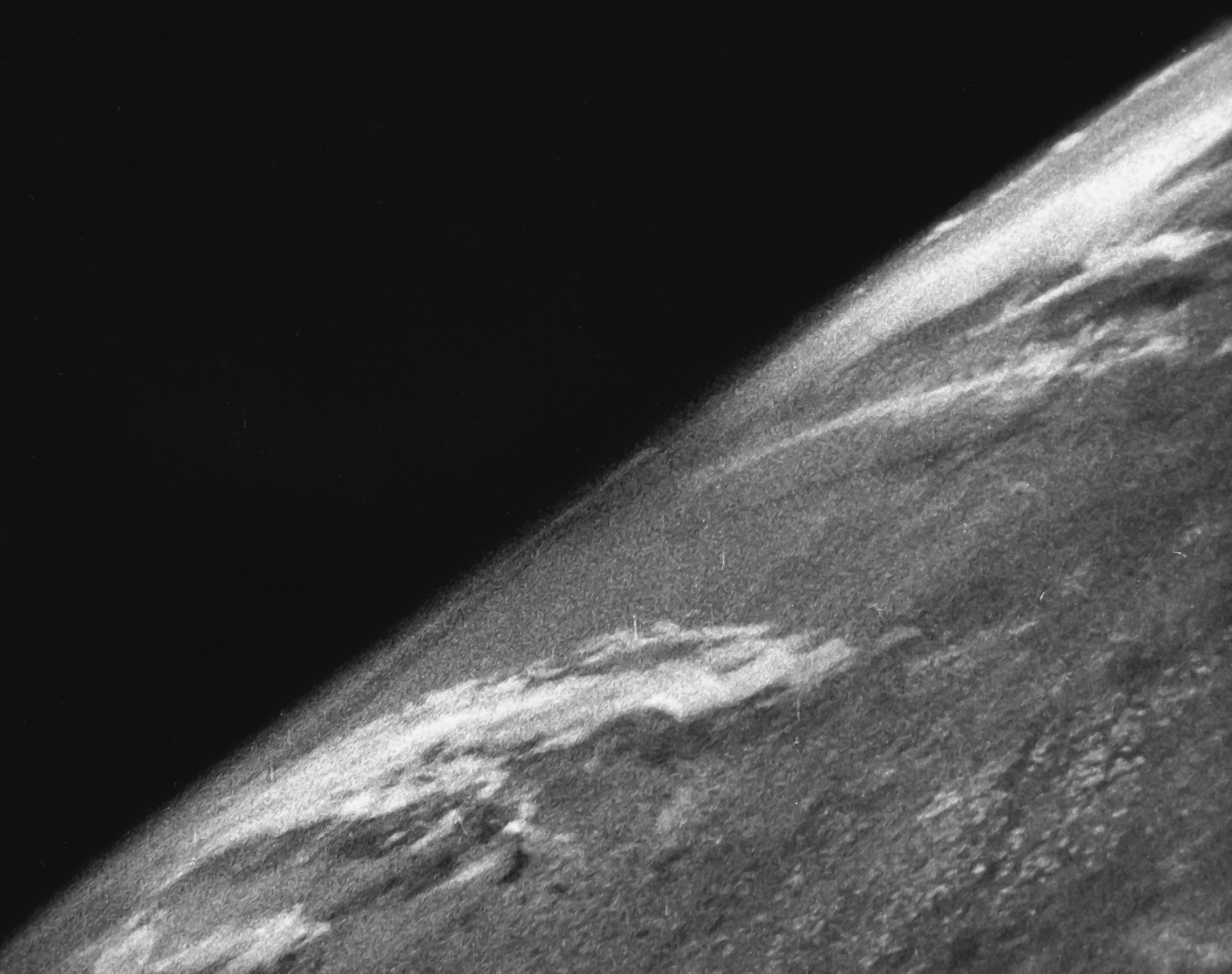
On October 24, 1946, a 35-millimeter motion-picture camera aboard a captured German V-2 rocket recorded the first photographs of Earth from space. Launched from White Sands in New Mexico, the rocket reached an altitude of approximately 65 miles—105 kilometers—just above the generally recognized boundary of outer space. Little more than a year after World War II ended, a weapon developed for destruction was carrying an instrument that offered an unprecedented view of the planet.
The camera took a frame every one and a half seconds during the brief suborbital flight. Getting those images back, however, depended on surviving a violent return. The rocket struck the desert at roughly 500 feet per second, destroying the camera. The film, protected inside a steel cassette, survived the impact and was recovered.
Instrument specialist Clyde Holliday of the Johns Hopkins Applied Physics Laboratory played a central role in developing the camera experiment. The recovered images showed clouds over the American Southwest from a vantage point no previous photograph had reached. Grainy and unfamiliar, they nevertheless gave researchers their first photographic view of Earth from space.
The flight did not place a satellite in orbit or photograph the entire globe. Its achievement was more specific: it demonstrated that a rocket-borne camera could record Earth from beyond the atmosphere’s familiar aerial viewpoints and return usable images. More than a decade before the first artificial satellite, the experiment marked an early milestone in observing our world from space.
Eighty years later, the photographs remain powerful not because of their clarity, but because of their perspective. A camera carried above the planet had looked back—and its fragile film had survived to show the result.
