
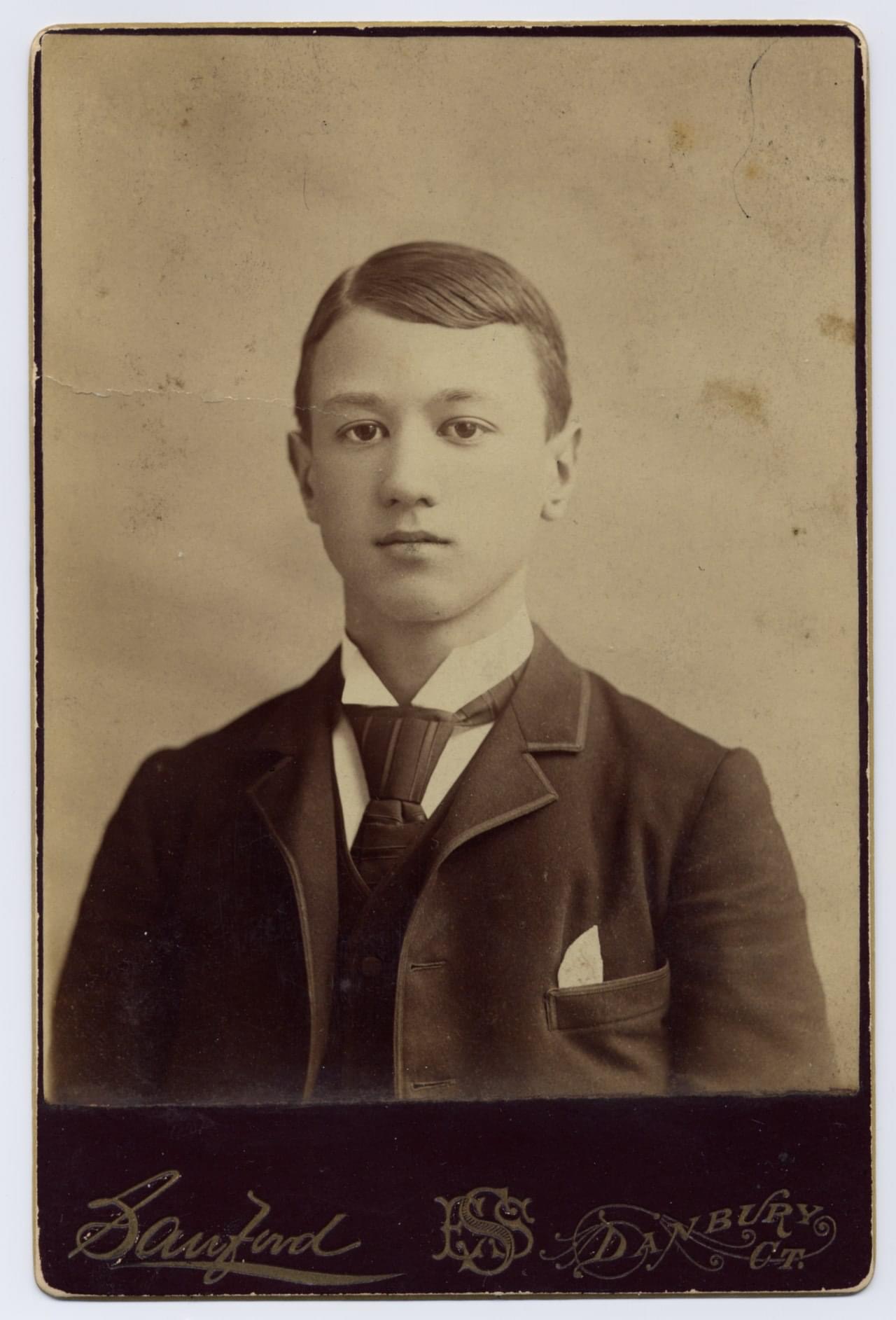
Born on October 20, 1874, in Danbury, Connecticut, Charles Edward Ives became one of the most original voices in American classical music. His father, George, a former Union Army bandleader, taught him traditional harmony while encouraging experiments with unconventional sounds and overlapping keys. Ives later built a successful insurance career, composing during evenings and weekends rather than relying on music for his livelihood.
In A Symphony: New England Holidays, Ives transformed memories of his childhood into an orchestral landscape. Developed over many years, its four movements evoke the celebrations and rituals of the New England calendar: “Washington’s Birthday,” “Decoration Day,” “The Fourth of July,” and “Thanksgiving and Forefathers’ Day.” Together, they form a kind of American “Four Seasons,” shaped by communal gatherings and the sounds that lingered in his memory.
Ives’s distinctive achievement was to make familiar music sound startlingly new. Hymns, patriotic melodies, and marching-band music overlap in contrasting keys and rhythms, suggesting the experience of hearing several musical events at once. Rather than smoothing those collisions into a single orderly texture, he made their friction part of the music itself. The result is both experimental and nostalgic: a modernist sound world rooted in everyday American life.
Recognition came slowly. Performers including Aaron Copland, John Kirkpatrick, and Lou Harrison helped bring his work to wider attention in the 1930s and 1940s. In 1947, Ives received the Pulitzer Prize for his Symphony No. 3, a separate work subtitled The Camp Meeting. His music’s originality lay not simply in breaking conventions, but in finding new musical possibilities in the hymns, celebrations, and competing sounds of the world he remembered.
