
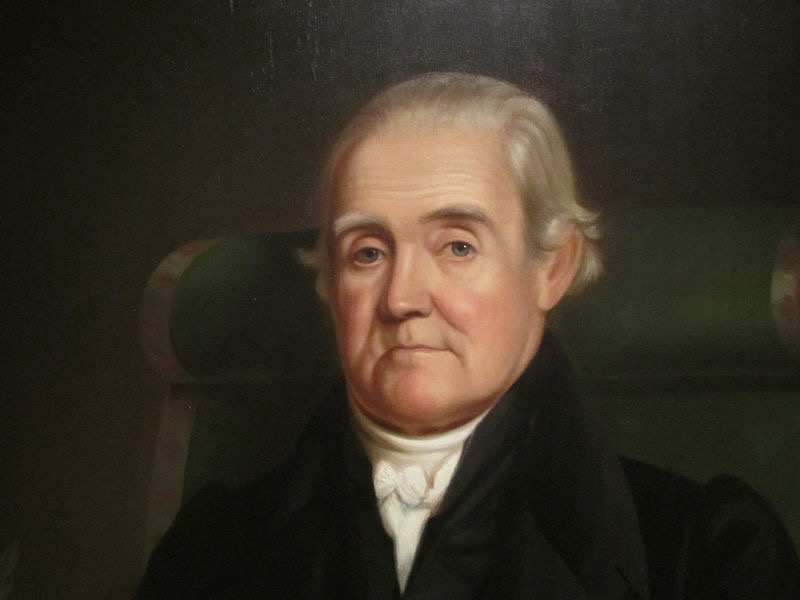
On October 16, 1758, lexicographer and language reformer Noah Webster was born in West Hartford, Connecticut. Growing up during the tumultuous years of the American Revolution, Webster came to believe that cultural and linguistic independence from Great Britain was just as vital as political sovereignty. He argued that a young, democratic nation needed its own uniform system of language to foster national unity, reduce regional biases, and simplify the education of American children.
To achieve this goal, Webster dedicated decades of his life to studying philology and the evolution of speech, eventually mastering twenty-six languages to trace the origins of words. In 1806, he published his initial work, A Compendious Dictionary of the English Language, which laid the groundwork for his crowning achievement, the 1828 American Dictionary of the English Language. His work deliberately altered traditional British spellings to align more closely with phonetics, dropping the silent u from words like colour and honour, and changing the endings of theatre and centre to theater and center.
Beyond his lasting impact on spelling, Webster’s blue-backed speller books taught generations of American children how to read, spell, and pronounce words uniformly across the expanding country. His dictionaries did not merely list definitions; they captured uniquely American idioms and reflected the values of the growing republic. This portrait preserves the likeness of a man whose tireless scholarly labor helped standardize the language spoken across North America, providing a distinct linguistic identity that helped bind a diverse and expanding nation together.
Image by LOC via Wikimedia Commons, public domain in the US
