
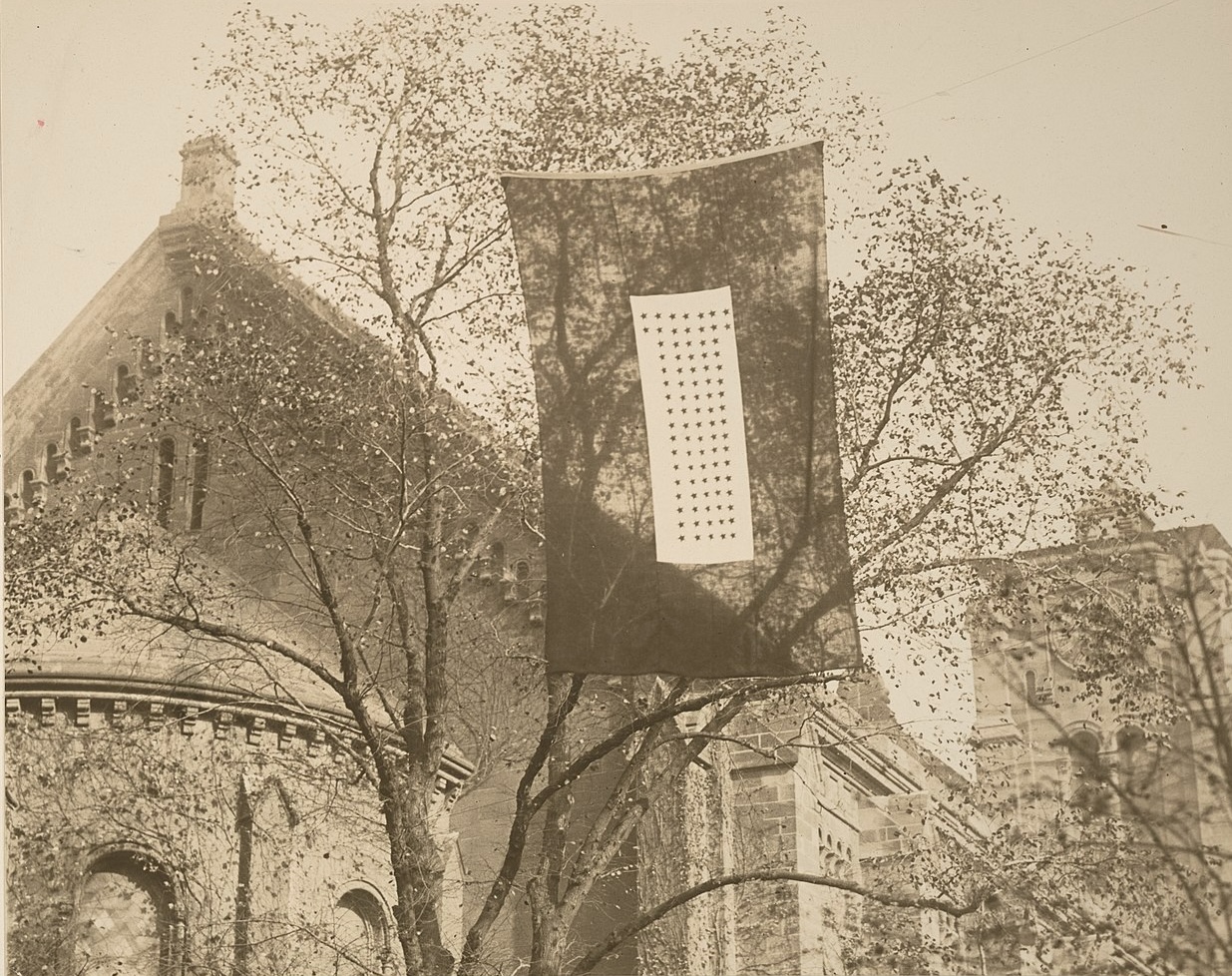
On October 13, 1917, during the mobilization months of World War I, St. George’s Episcopal Church in Manhattan displayed a large service flag bearing eighty-nine stitched stars. Each star represented a parishioner who had entered the United States Armed Forces following the American declaration of war in April 1917. Hung from the church at 209 East 16th Street, the banner functioned as a public roll of honor, making the congregation’s wartime participation visible to the surrounding community.
The display reflected a broader home-front practice that spread rapidly through American families, churches, businesses, and civic institutions after U.S. entry into the war. The service flag—also called the Blue Star Banner—had been designed and patented in 1917 by Army Captain Robert L. Queisser of the 5th Ohio Infantry, initially as a way for families to mark relatives in active service.
On such banners, a blue star signified a person in active military service; a gold star later replaced a blue star when that service member died while in service. At St. George’s, the eighty-nine stars therefore stood not for casualties, but for the scale of the parish’s contribution to the war effort—a visible expression of local patriotism, sacrifice, and communal obligation.
