
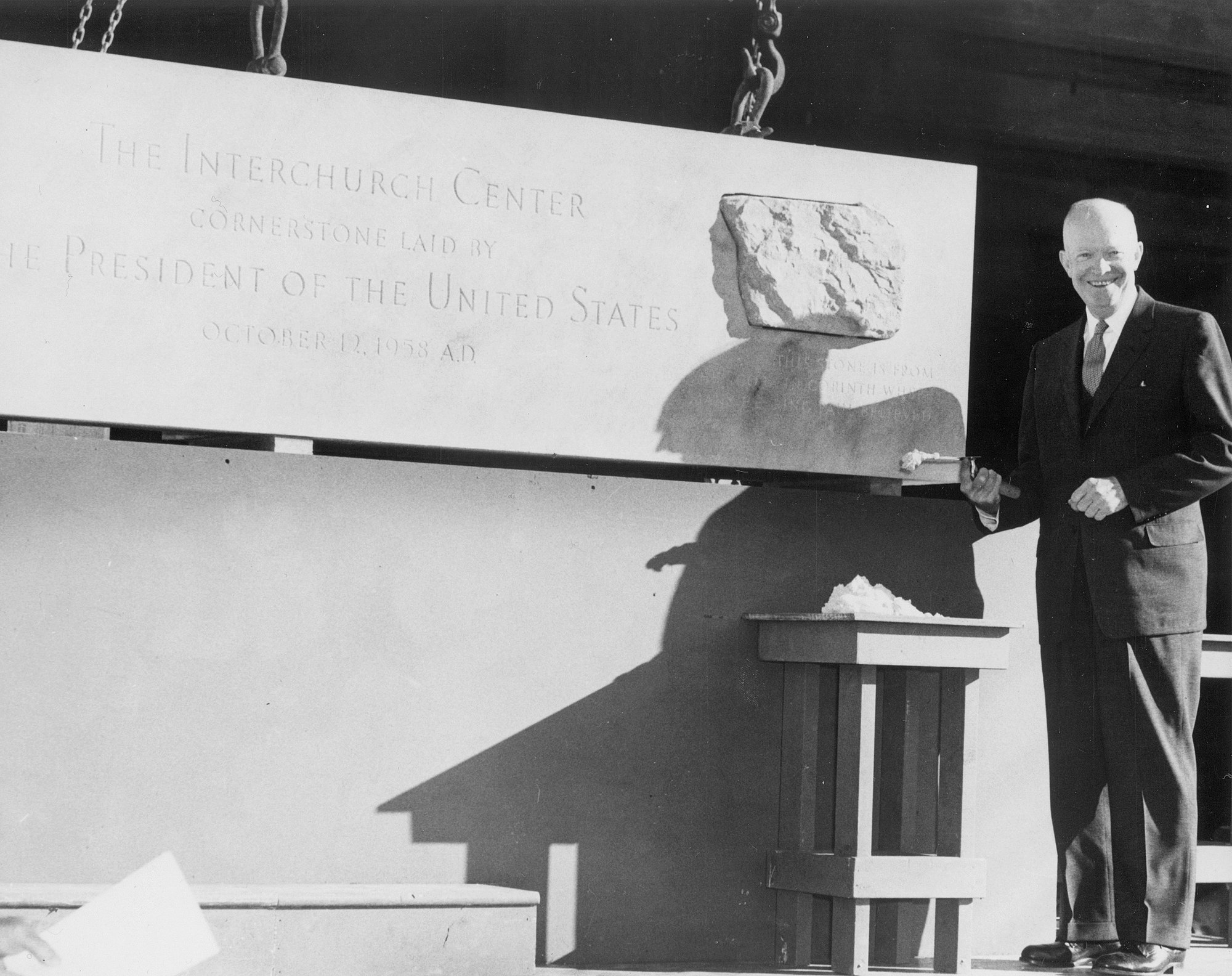
On October 12, 1958, President Dwight D. Eisenhower stood before a large New York City crowd to lay the cornerstone of The Interchurch Center, a major administrative headquarters in Morningside Heights for Protestant, Anglican, and Eastern Orthodox organizations. In his address, Eisenhower presented the building as a symbol of religious freedom, invoking the biblical promise of “‘The Truth’ that sets men free.”
Eisenhower also used the ceremony to condemn the bombing earlier that morning of the Hebrew Benevolent Congregation Temple in Atlanta. Departing from his prepared remarks on religious architecture, he called it horrifying that anyone would desecrate “the holy place of any religion” and declared that Americans who valued freedom of worship would not countenance attacks on any edifice representing a great faith.
His remarks turned a cornerstone ceremony into a mid-century appeal for religious solidarity and an executive condemnation of antisemitic violence amid the civil-rights struggle. The Atlanta bombing, caused by roughly fifty sticks of dynamite, damaged the Temple but injured no one; it was widely linked to white supremacist opposition to Rabbi Jacob Rothschild’s support for desegregation.
