
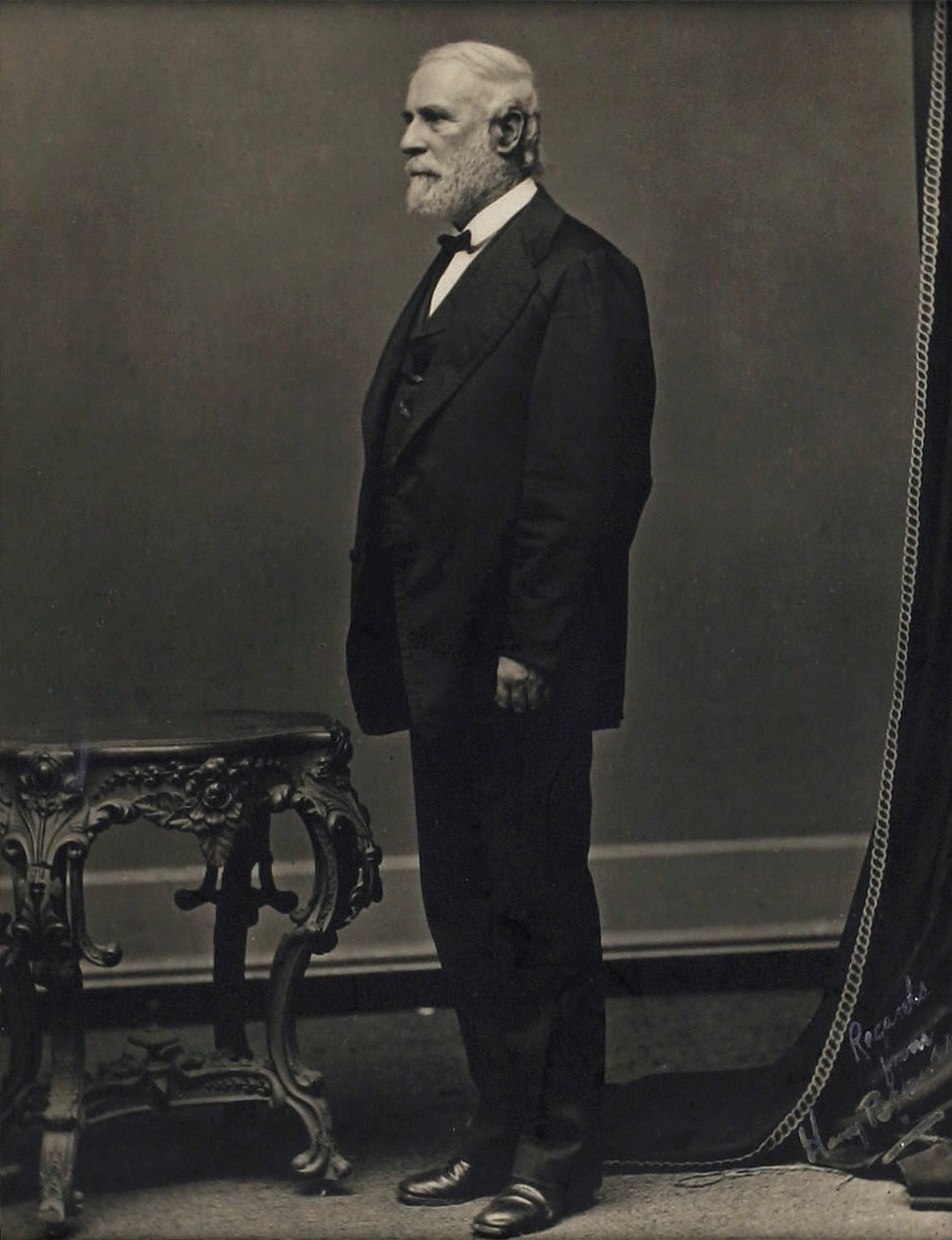
On October 12, 1870, Robert E. Lee, former general-in-chief of the Confederate States Army, died at his home in Lexington, Virginia, at the age of sixty-three. After surrendering at Appomattox Court House in 1865, Lee accepted the presidency of Washington College—later renamed Washington and Lee University—and spent his final years guiding the institution through the difficult early Reconstruction era. His health declined rapidly after he suffered a probable stroke on the evening of September 28, shortly after presiding over a vestry meeting; he died two weeks later from complications including pneumonia.
Lee’s death prompted widespread mourning across the South and helped cement his postwar image as a central figure of the “Lost Cause,” the later romanticized interpretation of the Confederacy. His remains were taken to the chapel of Washington College, where they lay in state before his funeral on October 15; former Confederate officers, veterans, students, and Virginia Military Institute cadets took part in the observances. He was buried in a vault beneath the chapel, which became a major site of Confederate commemoration.
On the anniversary of his death, biographers and historians continue to examine Lee’s legacy from multiple viewpoints. While early accounts frequently highlighted his postwar efforts toward national reconciliation and his personal reflections on the struggles of his era, contemporary historical scholarship focuses on his role as the premier military defender of the Confederate States and the social and political crises that defined the American Civil War.
