
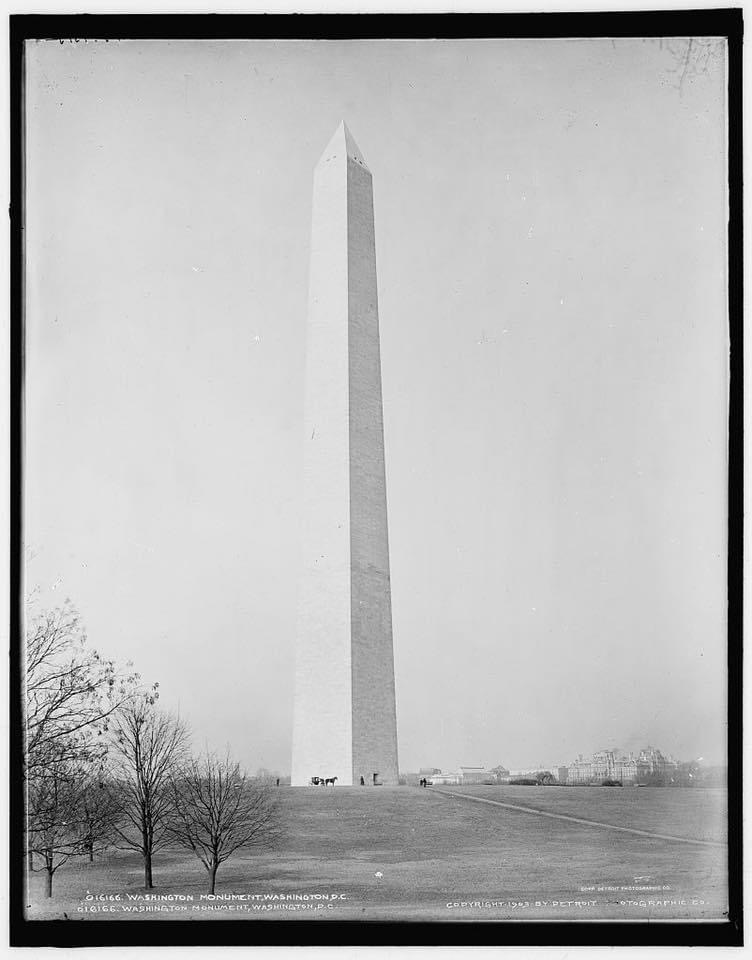
On October 9, 1888, the Washington Monument opened to the public, allowing visitors to ascend the soaring stone obelisk by steam-powered elevator or, for the determined, by its 898-step iron stairway. Rising 555 feet, 5⅛ inches over the National Mall, the monument was then the tallest structure in the world—a towering tribute to George Washington, the nation’s first president.
The opening came after one of the country’s most protracted building projects. Construction began in 1848 but stalled in 1854 amid funding troubles, internal disputes, and the upheaval of the Civil War. For more than two decades, the unfinished monument stood at about 156 feet, and the change in stone color visible today marks where construction resumed in 1876. The exterior was completed in 1884, the monument was dedicated in 1885, and public access formally began three years later with the installation of a passenger elevator.
The first public elevator ride on October 9 carried 32 passengers on a roughly 10-minute trip to the observation level. For a nation still healing from the Civil War, the completed monument offered a conspicuous symbol of commemoration, ambition, and national continuity. Today, the Washington Monument remains a defining feature of Washington, D.C.’s skyline and an enduring memorial to George Washington.
Image: Washington Monument, Washington, D.C. by William Henry Jackson, 1903 via Library of Congress, no known restrictions
