
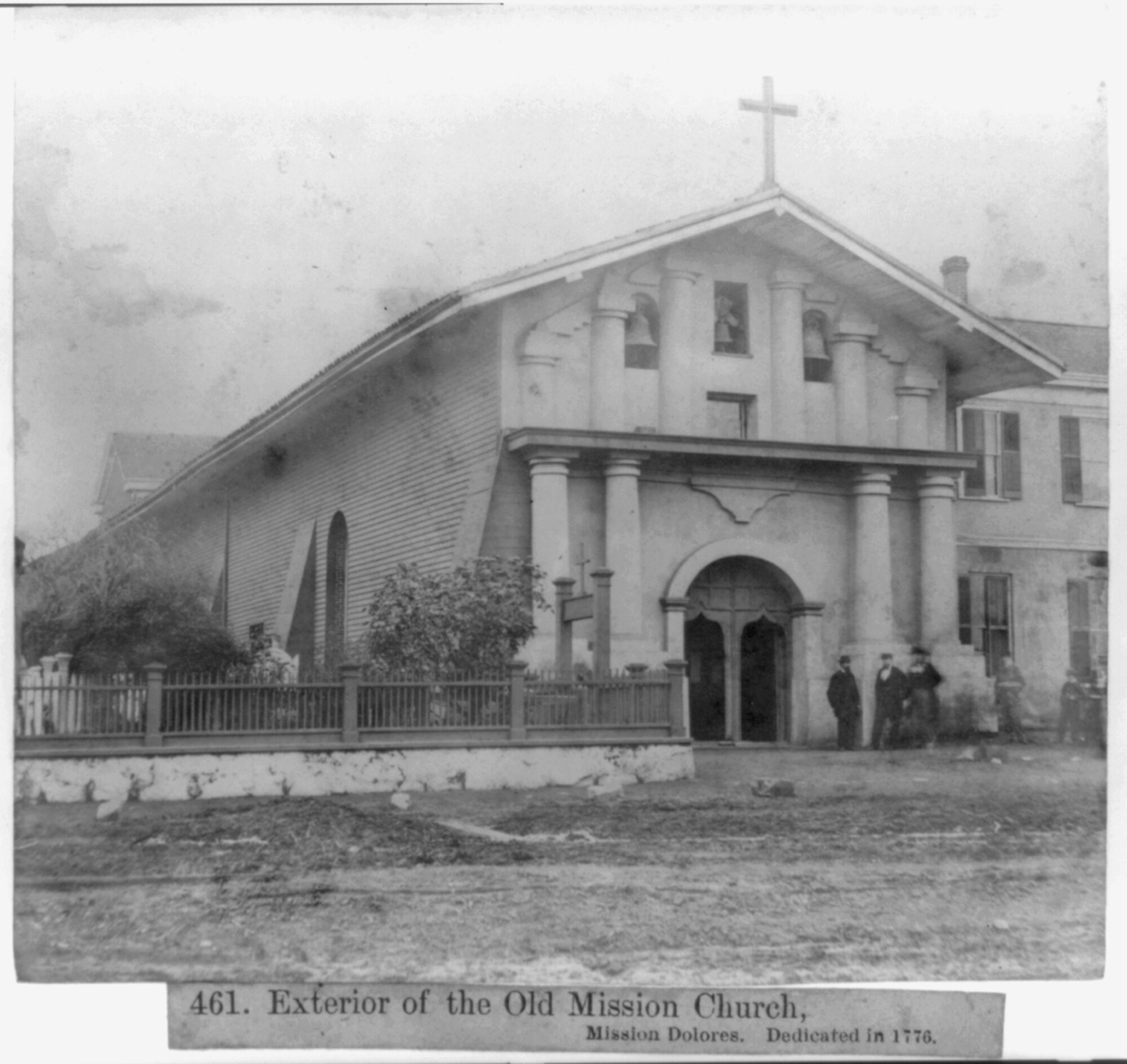
On October 9, 1776, Spanish Franciscan missionaries formally dedicated Mission San Francisco de Asís in present-day San Francisco. Father Francisco Palóu and Father Pedro Benito Cambón established the mission in connection with the expedition led by Lt. José Joaquín Moraga. The first chapel was a modest temporary structure of wooden poles, mud plaster, and thatch.
Known today as Mission Dolores, the mission later acquired the adobe church that still stands on the site. Completed and dedicated in 1791, that building is recognized as San Francisco’s oldest intact structure and the only intact mission chapel among California’s 21 historic missions.
The mission’s founding came in the same year that the American Revolution was underway on the East Coast, marking Spain’s expanding colonial presence on the Pacific frontier. It grew into a religious and agricultural center, reshaping the region through the labor and forced incorporation of Ohlone people into the mission system. That history includes both the mission’s enduring architectural legacy and the profound disruption it caused to Indigenous communities.
The adobe church has survived generations of earthquakes, including the 1906 San Francisco earthquake. Its thick walls, painted ceiling timbers, cemetery, and surviving Ohlone artistic traditions make Mission Dolores a significant—and complicated—record of early San Francisco history.
