
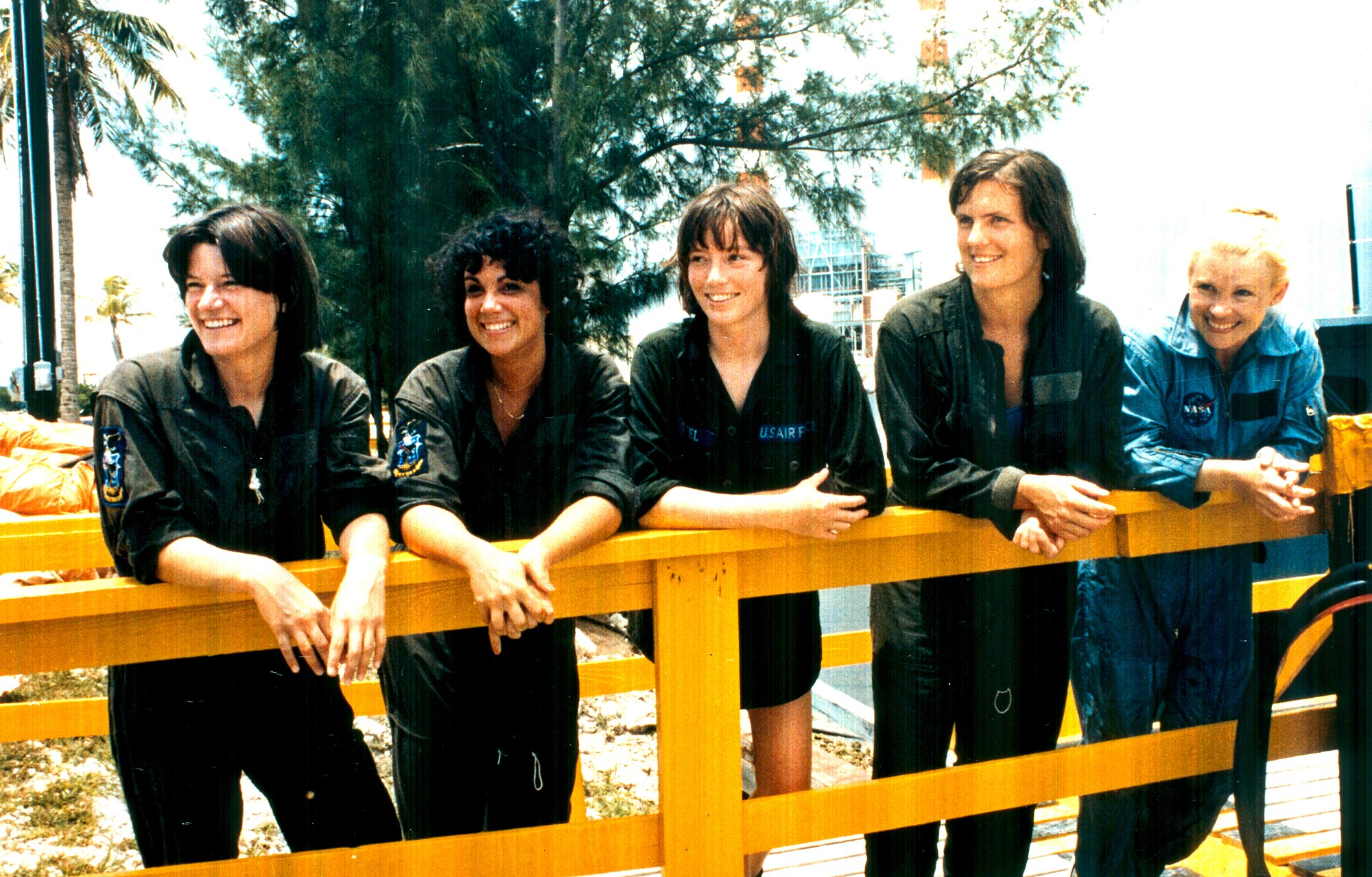
In 1978, NASA selected its first six female astronaut candidates, marking a historic shift in the U.S. space program. The group included Shannon W. Lucid, Margaret Rhea Seddon, Kathryn D. Sullivan, Judith A. Resnik, Anna L. Fisher, and Sally K. Ride. Their selection expanded an astronaut corps that, until then, had been drawn largely from male military test pilots, and it opened a new path for scientists and women in human spaceflight.
The women completed the same demanding astronaut-candidate training as their classmates, preparing for the emerging Space Shuttle era. Their scientific backgrounds and operational training helped reshape the astronaut role beyond the earlier test-pilot model, laying the foundation for women to serve as mission specialists, conduct research, operate spacecraft systems, and lead complex missions.
That transformation became especially visible on October 5, 1984, when Space Shuttle Challenger launched on STS-41G with Sally Ride and Kathryn Sullivan aboard. The mission was the first spaceflight to include two women. It was Ride’s second trip to space and Sullivan’s first; during the mission, Sullivan also became the first American woman to perform a spacewalk.
The women of NASA’s 1978 astronaut class did more than break a barrier: they broadened the definition of who could become an astronaut and helped establish a more inclusive future for American space exploration.
