
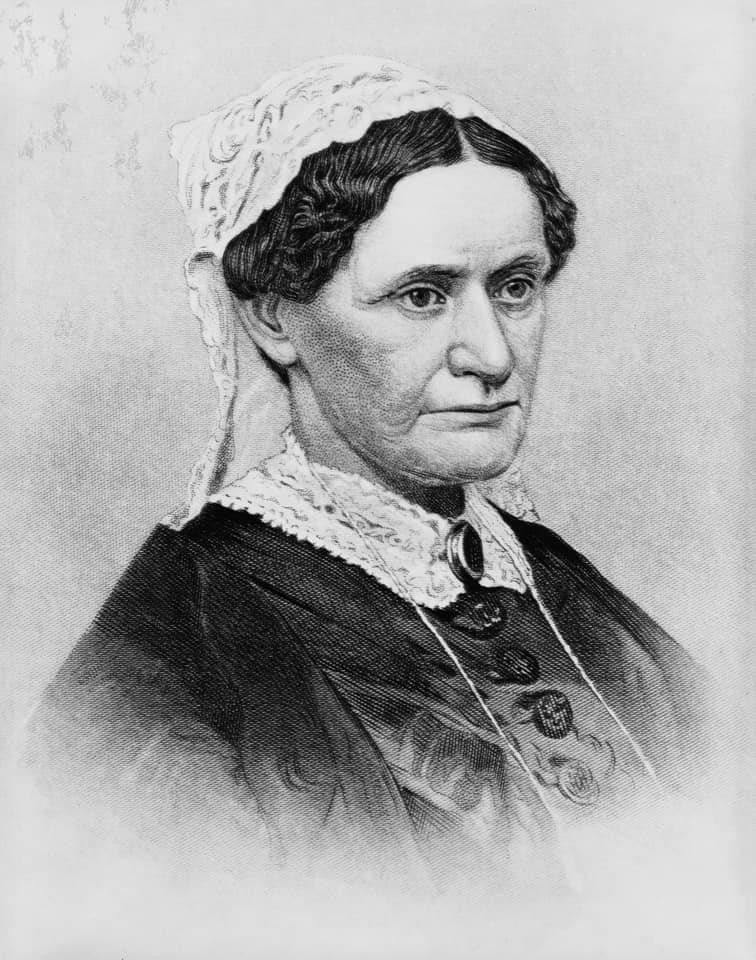
On October 4, 1810, future First Lady Eliza McCardle Johnson was born in East Tennessee. Her exact birthplace is disputed: the Johnson family Bible names Greeneville, while other accounts place her birth near present-day Telford. What is clearer is the powerful role education would play in her life—and in the rise of her husband, Andrew Johnson.
Eliza married Andrew Johnson in 1827, when she was sixteen and he was eighteen. He was a young Greeneville tailor with little formal schooling, not wholly illiterate as later legend often suggests. Eliza, who had received a comparatively strong education, read to him while he worked and helped him improve his writing, grammar, arithmetic, and public speaking. She encouraged his ambitions and remained an important intellectual partner as his career took him from local politics to the Tennessee legislature, the governorship, and the United States Senate.
The Civil War brought devastating hardship. A committed Unionist in Confederate-held East Tennessee, Eliza endured harassment and forced displacement from her home. Already suffering from tuberculosis, she reached the White House in 1865 in fragile health after Andrew Johnson succeeded Abraham Lincoln. Her illness kept her largely out of public view, but she continued to advise her husband privately. Her daughter Martha Patterson assumed much of the family’s hosting role, with other relatives—including Eliza’s daughter Mary Stover—also present in the presidential household.
Eliza McCardle Johnson’s birthday marks the life of a resilient and often-overlooked first lady: a woman whose learning, perseverance, and private counsel helped shape the path to an American presidency.
Image credit: Archival portrait engraving of First Lady Eliza McCardle Johnson, via Wikimedia Commons, public domain
