
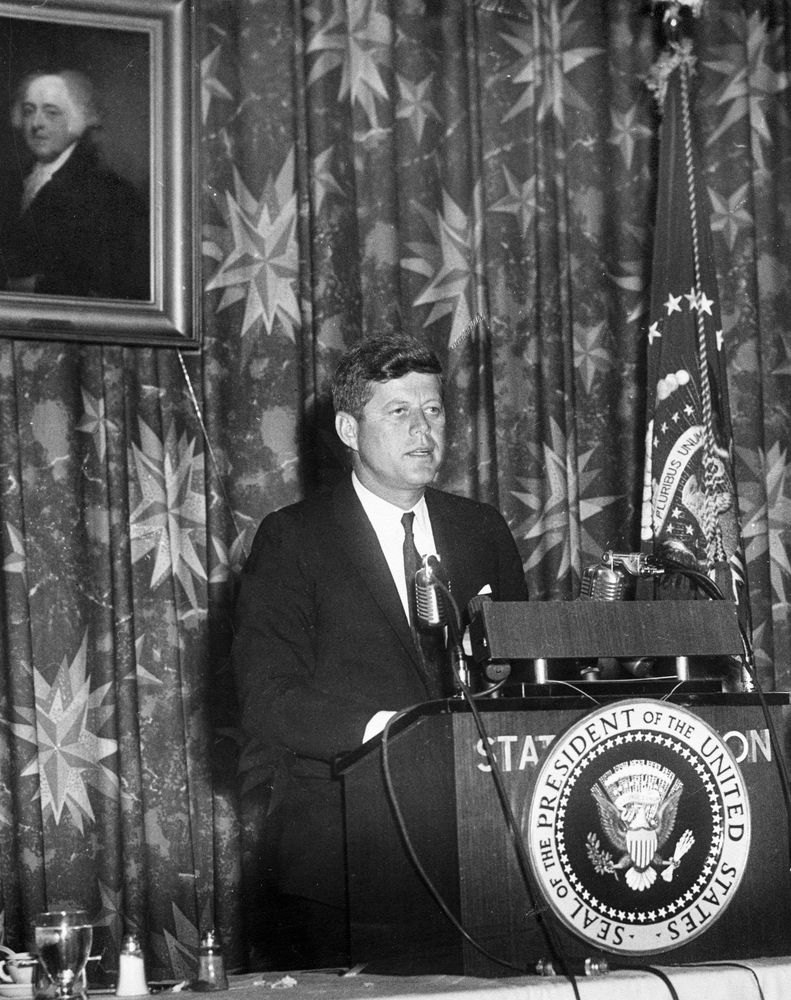
On October 3, 1961, President John F. Kennedy delivered a witty and historically informed address at a luncheon in Washington, D.C.’s Statler-Hilton Hotel, marking the publication of the first four volumes of The Adams Papers: Diary and Autobiography of John Adams. Sponsored by The Washington Post, the event celebrated a major editorial effort to make the records of one of America’s most consequential political families more accessible to scholars and the public.
Speaking to an audience that included leading editors, historians, and members of the Adams family, Kennedy used the occasion to reflect on the extraordinary public-service legacy of John Adams and his descendants. He praised the family’s “tremendous devotion to the public interest” and its lasting place in American political life.
Kennedy also drew attention to a striking fact of early presidential history: during the first 50 years of the constitutional government, John Adams and his son John Quincy Adams were the only U.S. presidents not reelected. Rather than treating that record as a failure, Kennedy suggested that posterity had granted them a more meaningful reward than reelection—a lasting reputation for principle, courage, and service. “When posterity gives them something better than reelection,” he observed, “it does present a heart-warming thing to some of us who face the hazards of public life.”
Kennedy’s remarks emphasized the Adamses’ intellectual ambition, demanding self-judgment, and willingness to put public duty before political comfort. He concluded that they had bequeathed “two extraordinary and important qualities: conscience, Puritan conscience, and courage—the courage of those who look to other days and other times.”
Image credit: President John F. Kennedy addressing the Adams Papers luncheon, October 3, 1961, via Wikimedia Commons, public domain.
