
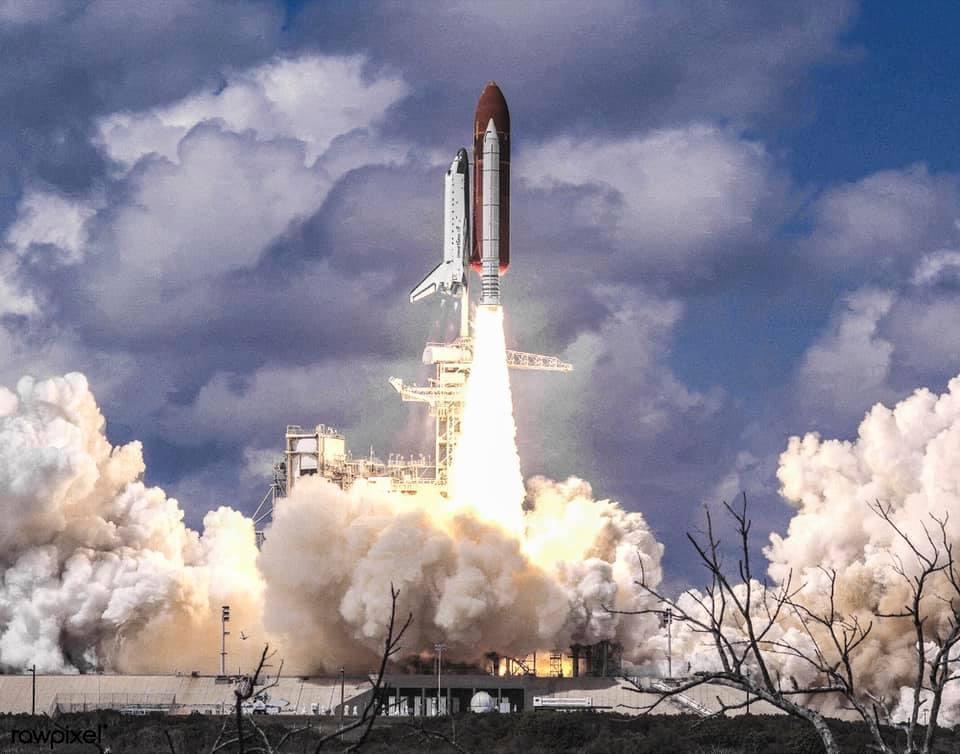
On September 29, 1988, Space Shuttle Discovery lifted off from Launch Complex 39B at Kennedy Space Center in Florida on mission STS-26. The launch marked NASA’s historic “Return to Flight”: the first Space Shuttle mission since the Challenger disaster of January 1986 had grounded the fleet for 32 months.
Under intense public scrutiny and with a mandate to rebuild confidence in the program, NASA spent nearly three years redesigning the solid rocket boosters’ field joints—the failure that led to the Challenger loss—and making more than 200 changes across the Shuttle system. The changes also included new launch-and-entry suits, a limited crew-escape capability, improvements to systems such as the brakes and main engines, and reforms to NASA’s safety and management practices.
Commanded by Frederick “Rick” Hauck, Discovery’s five-person crew deployed a Tracking and Data Relay Satellite and carried out science and technology experiments. After 64 Earth orbits, the shuttle landed safely at Edwards Air Force Base, California, on October 3, completing a mission of 4 days, 1 hour, and 11 seconds.
STS-26 did not erase the lessons of Challenger, but its successful completion demonstrated the redesigned hardware and the changes NASA had made after the accident. Discovery’s liftoff restored U.S. crewed Shuttle operations and began the program’s post-Challenger era.
Image credit: Space Shuttle Discovery liftoff via NASA and rawpixel.com, CC BY-SA 4.0.
