
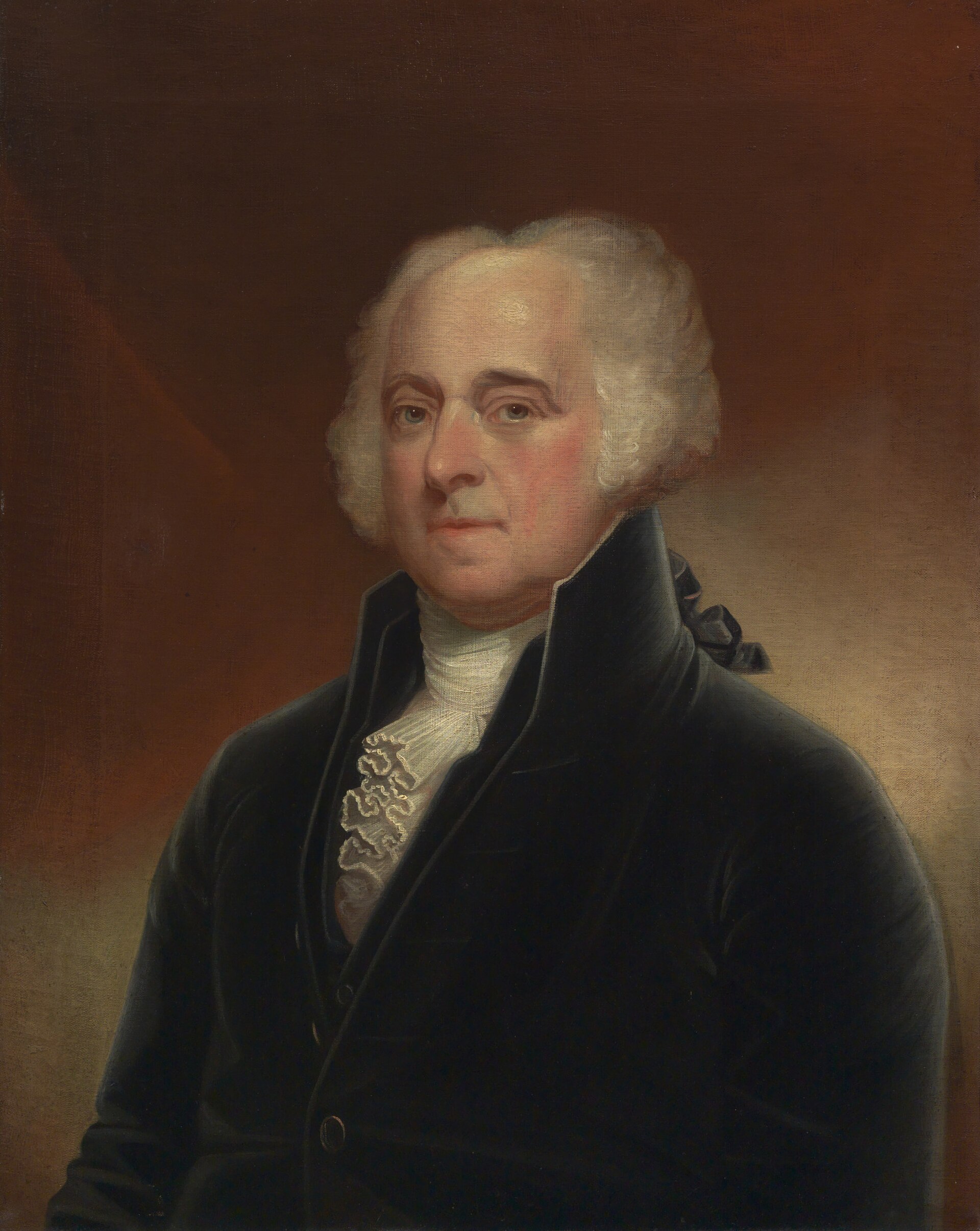
Just two months after returning from an exhausting diplomatic assignment in France, John Adams received another demanding commission. On September 27, 1779, the Continental Congress appointed him minister plenipotentiary to negotiate treaties of peace and commerce with Great Britain.
Expecting to return quickly to Europe, Adams departed Boston on November 15 with his young sons, John Quincy and Charles, along with members of his diplomatic staff. Their French frigate, La Sensible, developed serious leaks during the Atlantic crossing and, after twenty-four days at sea, was forced to put in at El Ferrol in northwestern Spain rather than continue to Brest.
Unwilling to wait for repairs, Adams and his party set out overland for Paris. They endured an arduous winter journey by mule and carriage across Spain and through the Pyrenees, traveling roughly 1,000 miles before reaching Paris on February 9, 1780.
There, Adams encountered a political impasse. Britain was not yet prepared to recognize American independence, while France’s foreign minister, the Comte de Vergennes, opposed public disclosure of Adams’s authority to negotiate, fearing it might suggest that the United States was seeking a separate peace. Adams’s mission, intended to advance a settlement, instead became a frustrating period of diplomatic uncertainty.
Image via Wikimedia Commons, public domain.
