
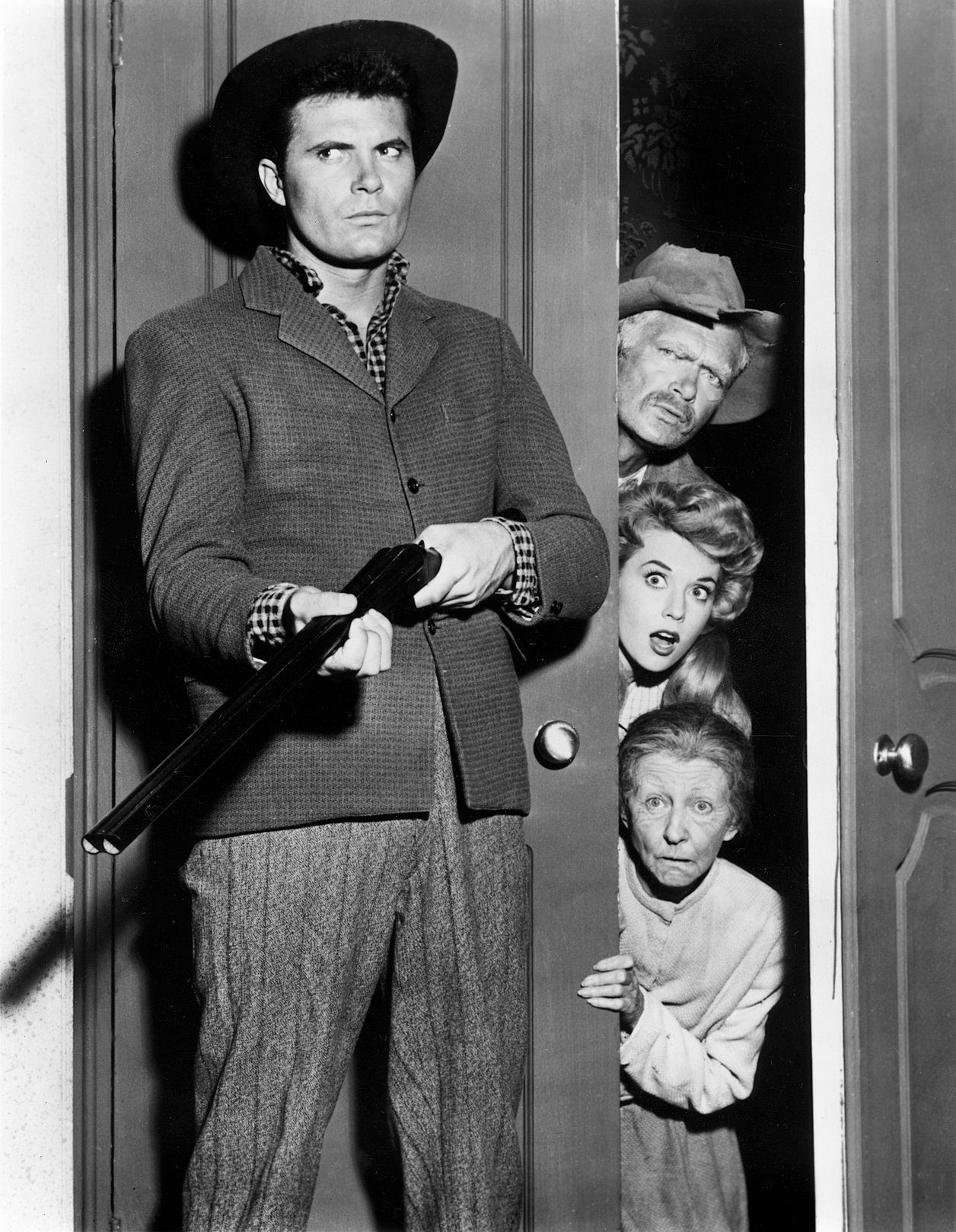
On September 26, 1962, The Beverly Hillbillies premiered on CBS—and quickly became one of television’s most unlikely blockbusters. Created by Paul Henning, the sitcom followed the Clampetts, an Ozarks family whose sudden oil wealth sends them from their rural home to a lavish Beverly Hills mansion. Within three weeks, the series had climbed to No. 1 in the U.S. ratings, despite being widely dismissed by critics.
The comedy came from a classic fish-out-of-water setup: Jed Clampett, Granny, Elly May, and Jethro brought their directness, generosity, and homespun assumptions into contact with Beverly Hills wealth, status-seeking, and social artifice. Critics often regarded the show as broad and lowbrow—The New York Timescalled it “strained and unfunny,” while Variety found it “painful to sit through”—but audiences embraced it in enormous numbers.
The ratings were extraordinary. The Beverly Hillbillies ranked No. 1 for both its first and second seasons, and it remained among the 20 most-watched U.S. programs for eight of its nine seasons. Its second-season episode “The Giant Jackrabbit” became the most-watched telecast up to that time and remains widely recognized as the most-watched half-hour sitcom episode.
The series ran for nine seasons, from 1962 to 1971, and helped establish rural-themed comedy as a major network-TV force during the decade. Along with its familiar banjo-led theme and its cast—Buddy Ebsen, Irene Ryan, Donna Douglas, and Max Baer Jr.—The Beverly Hillbillies became a durable piece of American pop culture. Its debut marked a reminder that audience enthusiasm can decisively outweigh critical disdain.
(Image: Promotional cast photo featuring Max Baer Jr., Buddy Ebsen, Donna Douglas, and Irene Ryan, via Alamy.)
