
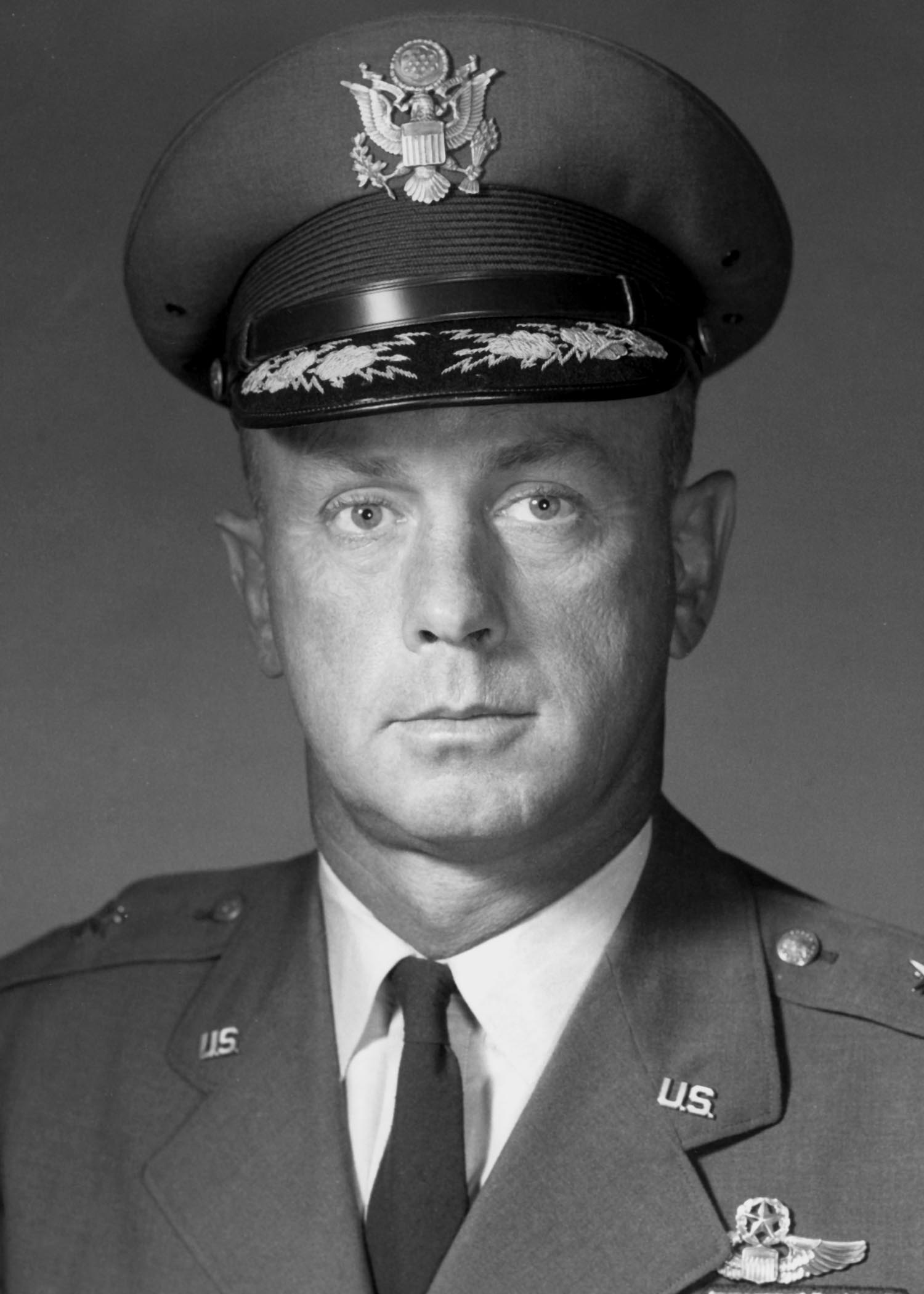
On September 20, 1919, Major General William Joseph Crumm was born in New York City. He entered the U.S. Army Air Forces as a flying cadet in 1941, earned his pilot wings in 1942, and went on to fly B-17 missions in the European theater during World War II. Over the following decades, he built a career in strategic bombardment and became a command pilot in the United States Air Force.
Crumm assumed command of Strategic Air Command’s 3rd Air Division at Andersen Air Force Base, Guam, in July 1965. In that role, he oversaw B-52 operations supporting Operation Arc Light—the sustained strategic-bombing campaign against targets in Southeast Asia. He directed those missions for nearly two years, during a period when the logistical and operational demands on Guam-based bomber forces were immense.
On July 7, 1967, Crumm was serving as airborne commander aboard a B-52D, call sign Kilo Red 2, on a strike mission from Guam toward targets in South Vietnam. Over the South China Sea, the aircraft collided with another B-52 during a formation-position change directed by ground radar after a navigation-equipment problem affected the lead bomber. Both aircraft crashed roughly 20 miles off the Vietnamese coast. Seven men survived, but Crumm and five others were lost.
Crumm was 48 years old. He is memorialized on the Courts of the Missing at the National Memorial Cemetery of the Pacific, and Andersen Air Force Base describes him as the highest-ranking U.S. military officer missing in action from the Vietnam War, presumed dead. His service and loss remain a sobering reminder of the human stakes behind the demanding B-52 operations of the Vietnam era.
Image via Wikimedia Commons, public domain.
