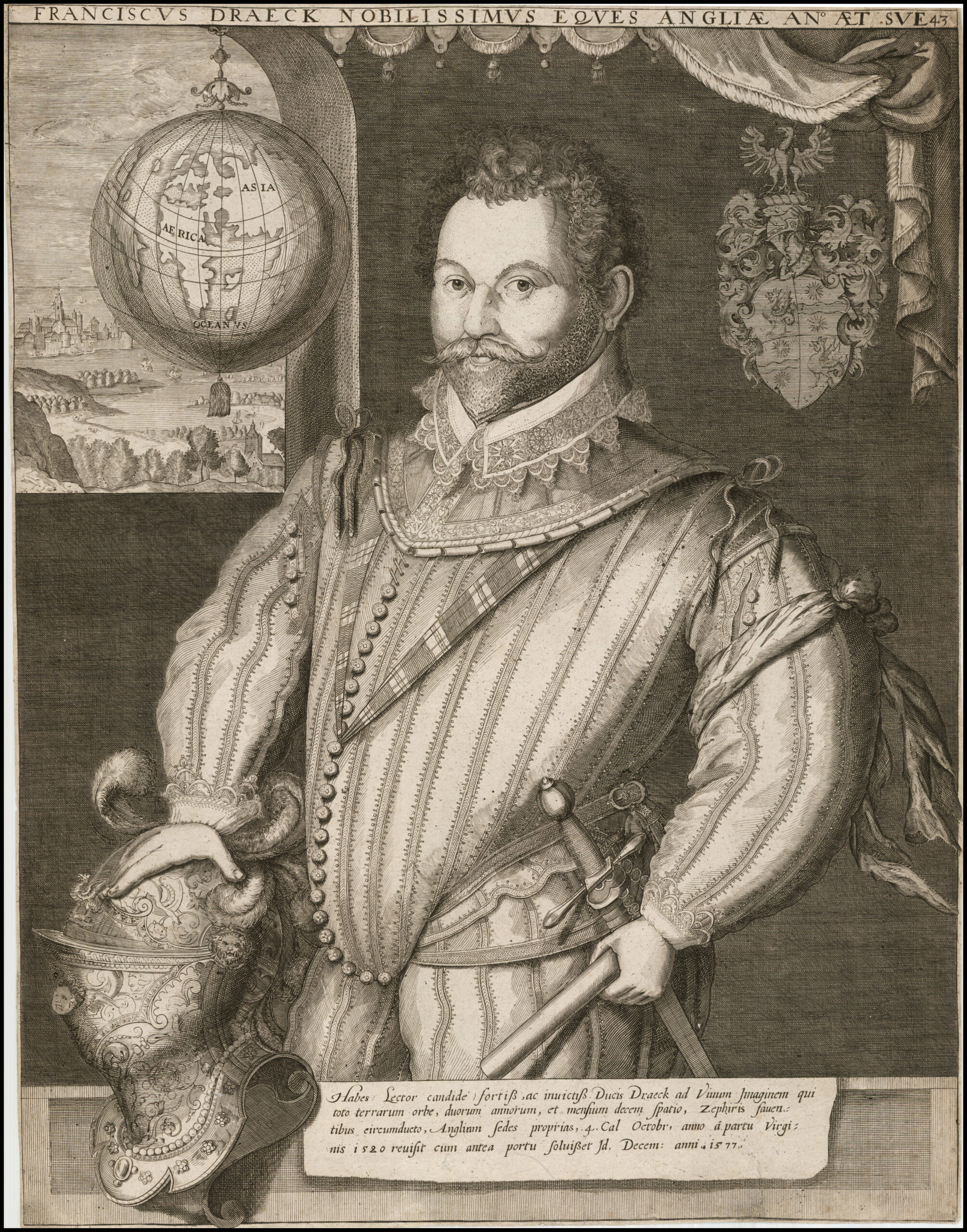
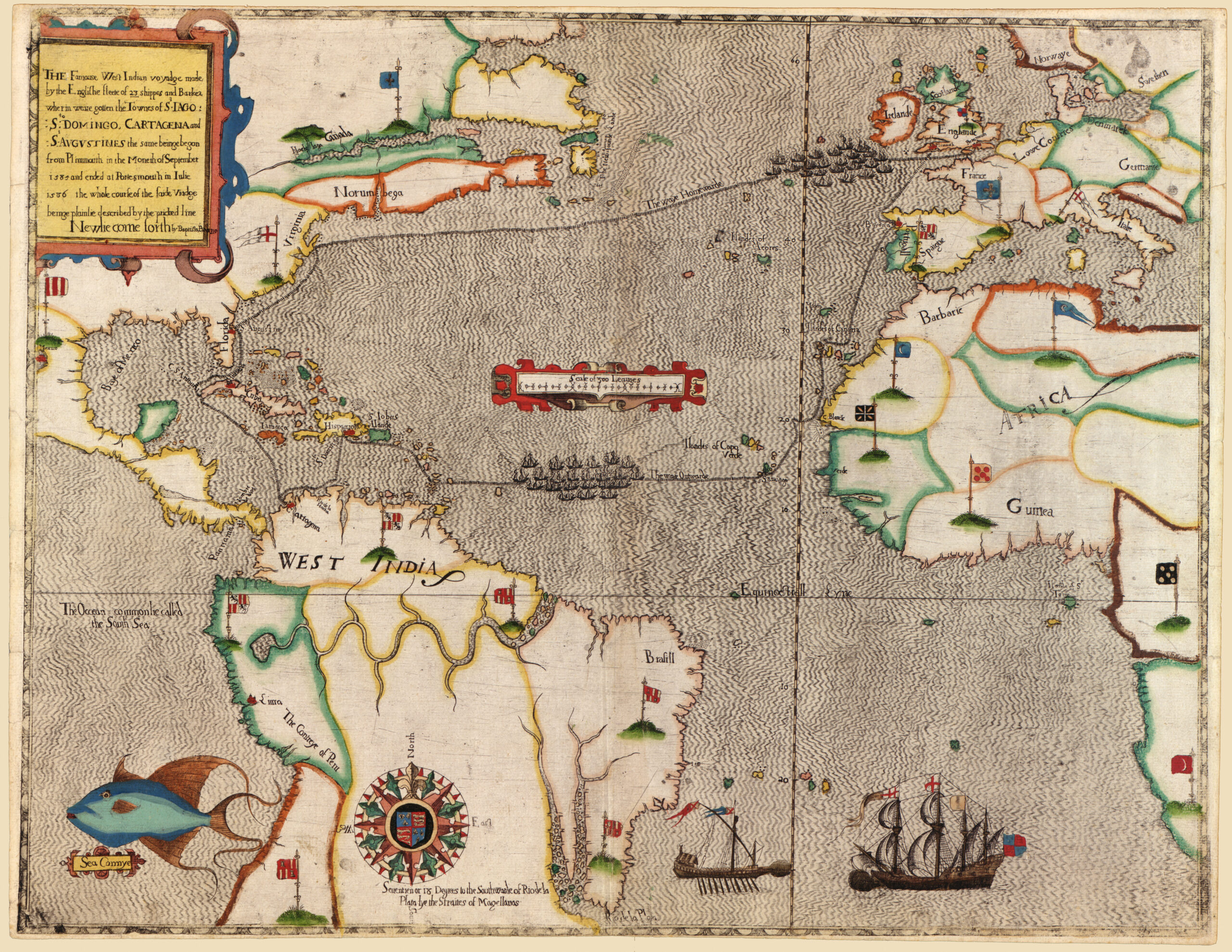
On September 14, 1585, Sir Francis Drake sailed from Plymouth with a major English raiding fleet bound for the Spanish Atlantic. The expedition included seven large ships and twenty-two smaller vessels, while surviving accounts differ over the total number of men aboard. It became one of the opening large-scale English operations of the Anglo-Spanish War, intended to strike Spanish imperial possessions and disrupt the movement of wealth through the Atlantic world.
The departure also had consequences for England’s precarious first attempt to establish a colony in North America. Earlier that summer, Sir Richard Grenville’s expedition had founded a fortified settlement on Roanoke Island and left a garrison of roughly 108 men under Ralph Lane. Grenville then returned to England, leaving the colony dependent on future resupply. By the following spring, shortages and worsening relations with neighboring Indigenous communities had made Lane’s position increasingly untenable.
Drake spent the winter and spring attacking Spanish possessions across the Atlantic. His force plundered Santiago in the Cape Verde Islands, captured and ransomed Santo Domingo, seized Cartagena, and later destroyed St. Augustine in Spanish Florida. In June 1586, while sailing north along the coast, Drake reached the Outer Banks and encountered Lane’s struggling colonists.
The meeting did not begin simply as an evacuation. Drake discussed leaving a vessel, supplies, and men, potentially enabling Lane to move the colony to a more favorable location. But a violent hurricane disrupted those plans. Faced with mounting hardship, Lane and most of the Roanoke colonists chose to depart with Drake for England in late June 1586. A relief force under Grenville arrived soon afterward and found the settlement deserted, apart from three men inadvertently left behind.
Drake’s 1585 departure therefore illustrates the close connection between England’s early colonial projects and its expanding conflict with Spain. Roanoke was not an isolated experiment at the edge of the Atlantic: its survival depended on ships, supplies, military priorities, and events unfolding from the Caribbean to the English coast. The 1585 colony failed, but its experiences—and Thomas Harriot’s later account of the region—helped shape subsequent English efforts to establish a settlement in North America.