
On September 9, 1850, California entered the Union as the 31st state. Its admission followed an unusually rapid political transition: rather than first spending years as an organized U.S. territory, California drafted a state constitution in 1849 and petitioned Congress directly for statehood. The immediate pressure came from the Gold Rush. After gold was discovered at Sutter’s Mill in 1848, more than 100,000 migrants arrived, transforming the region’s population, economy, and need for stable civil government.
California entered as a free state under the Compromise of 1850. Its admission ended the Senate’s numerical parity between free and slave states, creating a 16–15 free-state advantage, but it did not resolve the national struggle over slavery. Instead, California’s entry formed part of a broader legislative bargain meant to contain sectional conflict: the compromise also created territorial governments for Utah and New Mexico, addressed Texas’s boundary claims, ended the slave trade in Washington, D.C., and imposed a far stricter Fugitive Slave Act.
Statehood also had profound and damaging consequences within California. The new U.S. legal and political order marginalized many Californios and subjected Mexican-era land grants to expensive, protracted legal challenges that contributed to widespread land loss. For Indigenous Californians, statehood ushered in a catastrophic era of intensified displacement, violence, labor exploitation, and state-supported campaigns that devastated Native communities.
California’s admission secured the United States a strategically important Pacific presence at a moment of extraordinary economic change. The Gold Rush helped make San Francisco a major commercial and financial center, and California’s ports, mineral wealth, and later agricultural and transportation networks increasingly tied the state to national and global markets. Over time, those developments helped orient U.S. commerce, migration, and geopolitical ambition toward the Pacific.
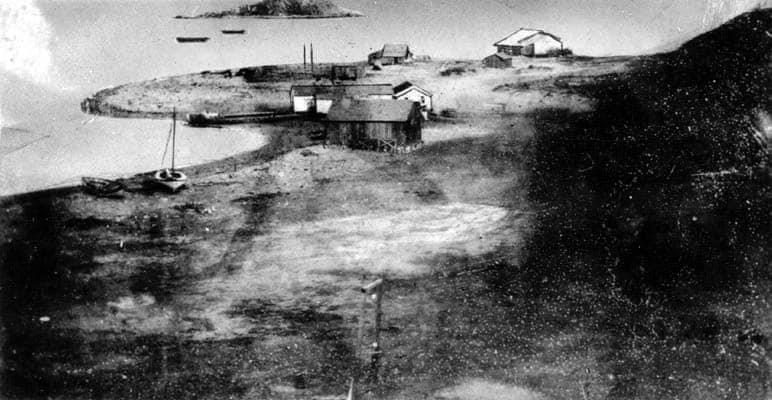
Image: An 1850 daguerreotype of what is now San Pedro, Los Angeles, California; Deadman’s Island appears in the image. Via Wikimedia Commons, public domain.
