
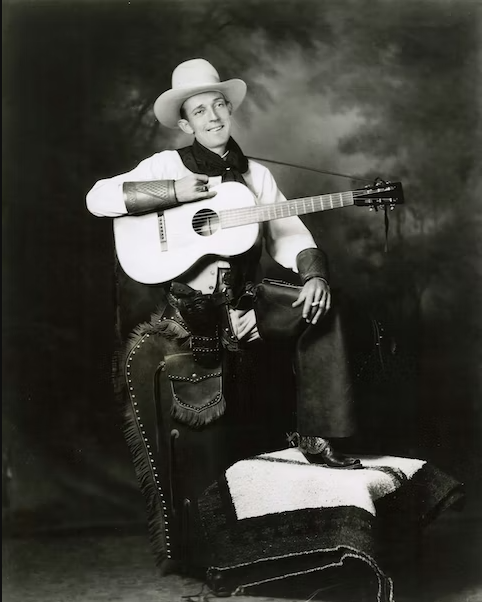
On September 8, 1897, pioneering singer, songwriter, and musician Jimmie Rodgers, universally revered as the “Father of Country Music,” was born in Meridian, Mississippi. Raised in the demanding world of Southern industrial labor, Rodgers spent his early youth working alongside his father on regional railroad networks, absorbing distinctive musical styles, field hollers, and traditional work songs of Black rail crews.
His meteoric musical career was shaped by extreme personal adversity when a tuberculosis diagnosis in 1924 made the grueling physical labor of the railroads impossible. Turning to music as a full-time pursuit, Rodgers transformed his physical suffering into a revolutionary artistic style during the historic 1927 Bristol Sessions. Combining traditional folk ballads, jazz rhythms, and his signature “Blue Yodel” vocal technique, he gave an authentic voice to working-class American experiences during the onset of the Great Depression.
Known permanently as “The Singing Brakeman,” Rodgers packed an immense volume of recordings into a brief career that ended with his death from tuberculosis in 1933 at age 35. His ability to project raw vulnerability, humor, and resilience on his records helped establish enduring themes and musical approaches in modern country music, directly influencing generations of songwriters from Hank Williams to Johnny Cash.
Image via Wikimedia Commons, public domain.
