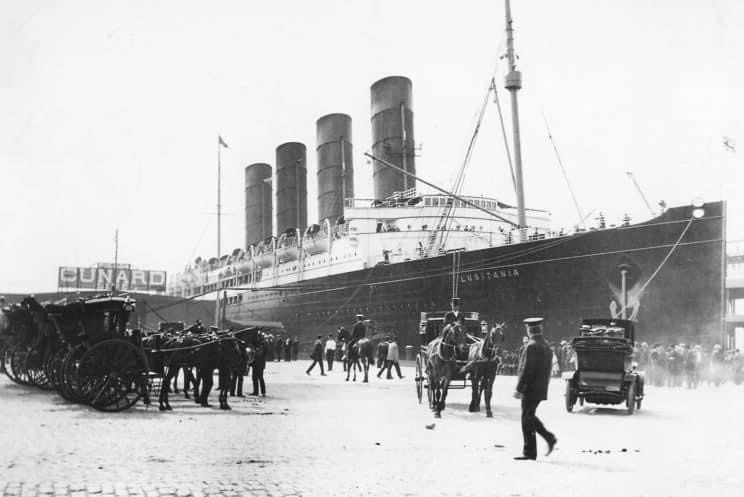
On September 7, 1907, the British ocean liner RMS Lusitania departed Liverpool on her maiden voyage to New York. Operated by the Cunard Line, the vessel had been built with substantial British government financial support as part of an effort to restore Britain’s leadership in the fiercely competitive North Atlantic passenger trade. Under the terms of that support, Lusitania and her sister ship Mauretania were designed to Admiralty specifications and could be called upon for wartime service.
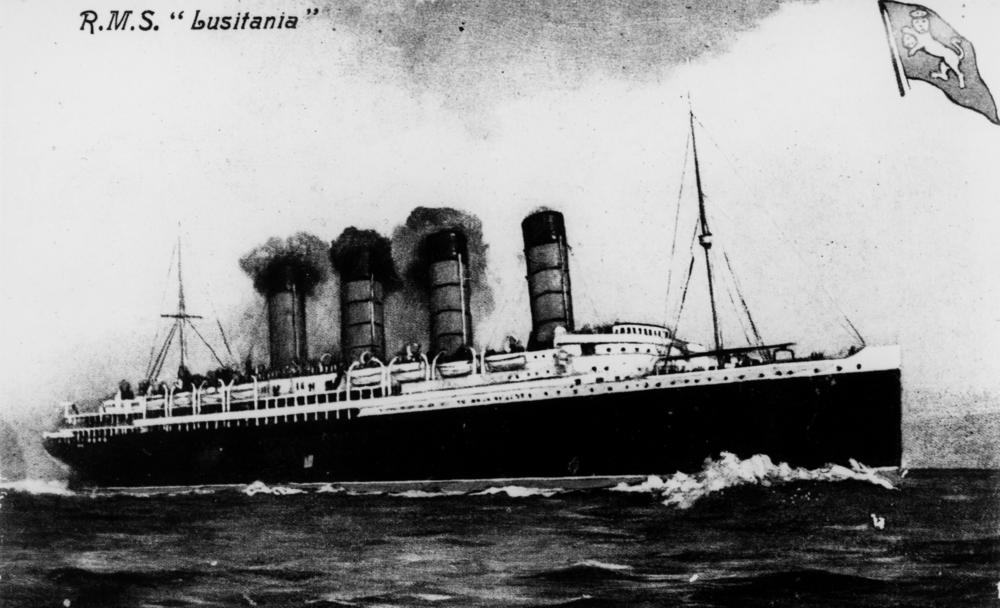
Over the following days, Lusitania demonstrated the potential of her then-revolutionary steam-turbine machinery. She reached Sandy Hook on September 13, completing the crossing in 5 days and 54 minutes, then proceeded to New York for a widely celebrated first arrival. The time fell just short of the existing transatlantic speed record, but the performance confirmed that Cunard had produced one of the fastest and most technologically advanced passenger liners afloat.
Lusitania secured the Blue Riband on her next westbound crossing, reaching Sandy Hook on October 11 in 4 days, 19 hours, and 53 minutes. Her early success marked a renewed British challenge to German dominance in Atlantic liner speed and prestige.
Photographs of the ship’s first New York arrival preserve the optimism surrounding a new age of high-speed ocean travel, mass migration, and industrial ambition. That optimism carries an unavoidable historical irony: fewer than eight years later, on May 7, 1915, a German U-boat sank Lusitania off the coast of Ireland, an event that shocked the public and became a major factor in the deterioration of U.S.-German relations during World War I.