
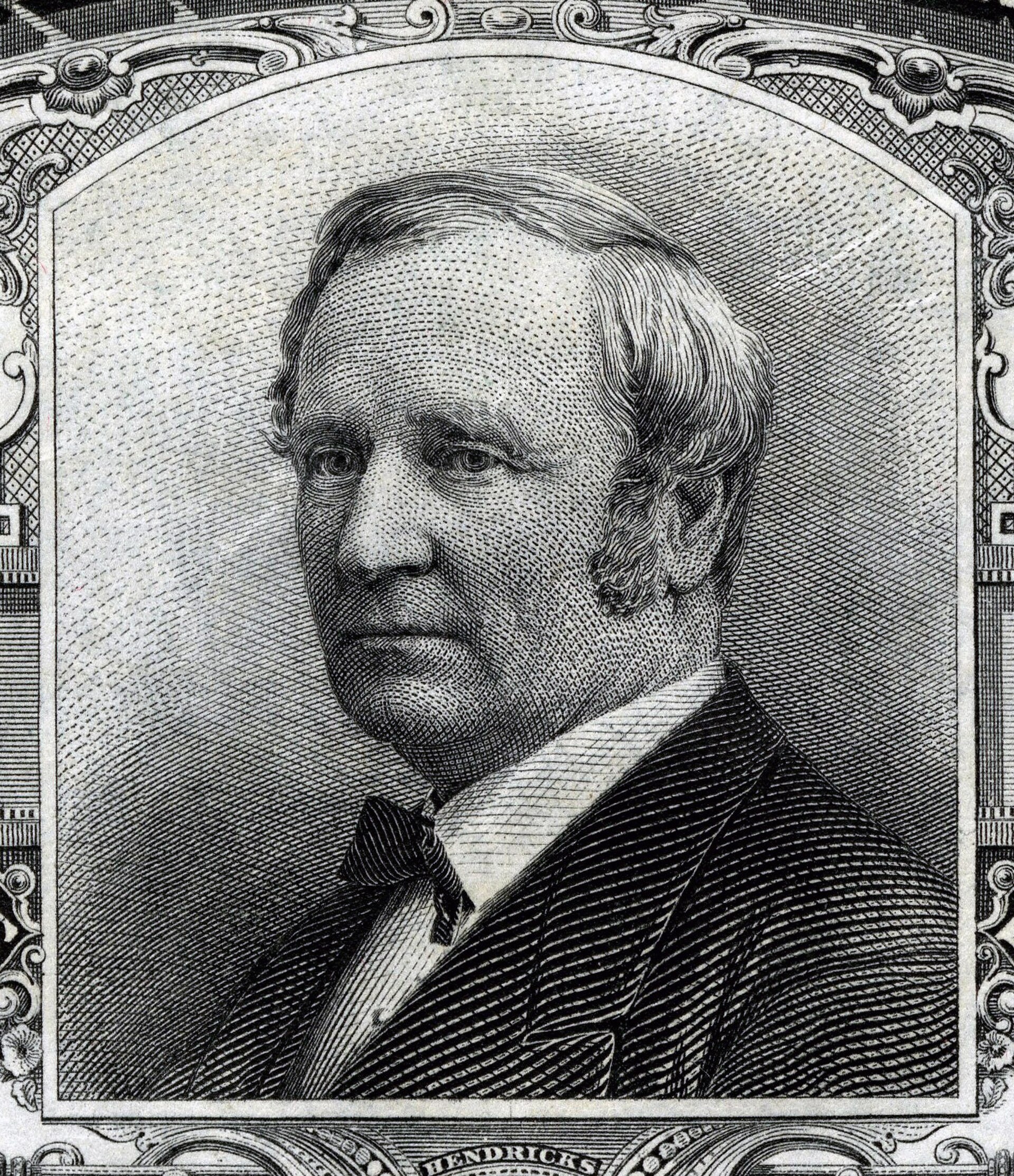
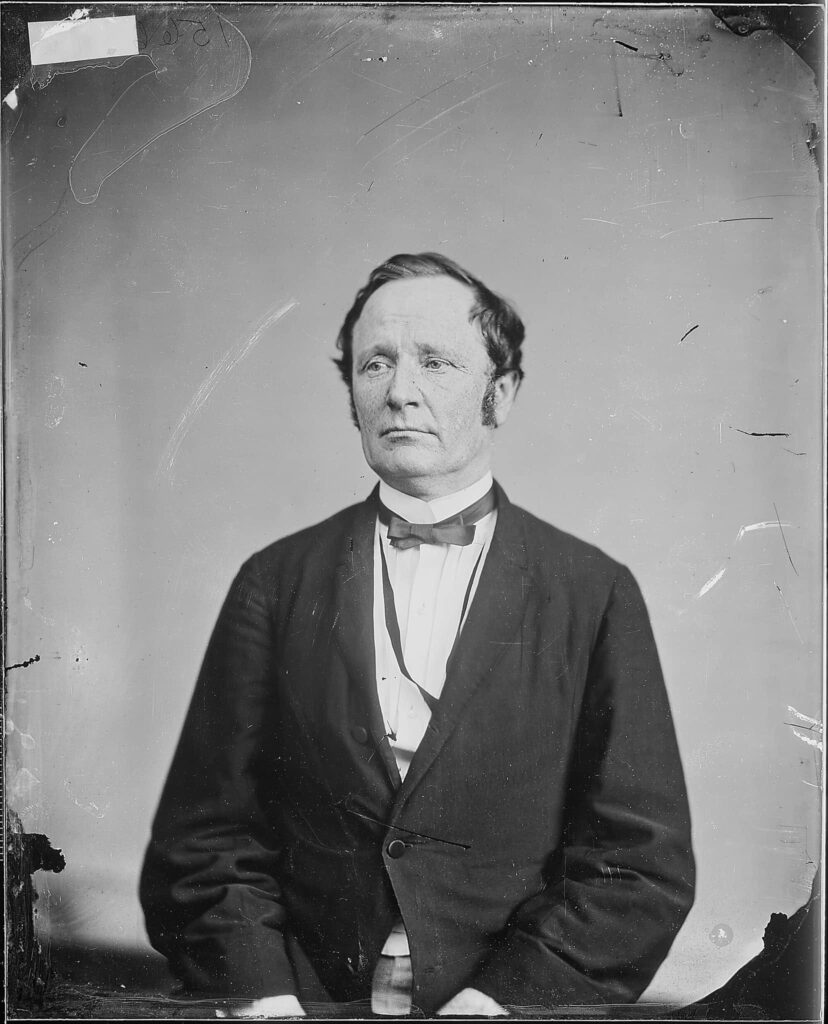
On September 7, 1819, statesman and lawyer Thomas A. Hendricks was born near Zanesville, Ohio. After relocating to Indiana as a child, he built a prominent Democratic political career, serving as a U.S. representative, U.S. senator, and the 16th governor of Indiana before being elected the 21st vice president of the United States. He took office alongside President Grover Cleveland in March 1885, at a moment when the country was still reshaping its political order in the decades after the Civil War and Reconstruction.
Hendricks holds a distinctive place in American numismatic history: he is the only vice president who never became president to appear on U.S. paper currency. His engraved likeness appeared at the center of the $10 Silver Certificate—widely known as the “Tombstone” note because of the grave-marker-shaped frame surrounding his portrait. The design first appeared in the Series of 1886 and was later reissued in the Series of 1891 and 1908.
The portrait was, in part, a posthumous memorial. Hendricks served as vice president for less than nine months, from March 4 until his sudden death in Indianapolis on November 25, 1885. After feeling ill the previous day, he went to bed early and died in his sleep at age 66.
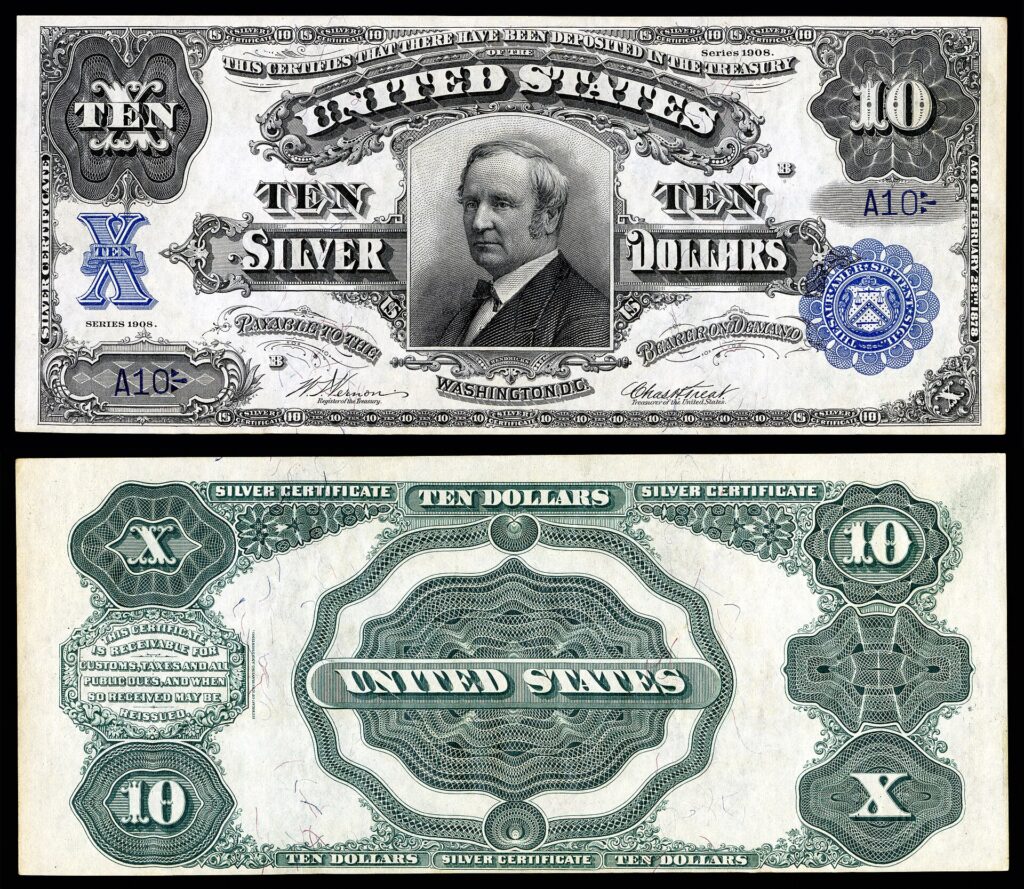
The note endures as an unusual tribute to a figure whose national prominence was substantial in his own era but whose short vice presidency often overshadows his longer public career. Its continued use across several Silver Certificate series preserved Hendricks’s image for generations of Americans and made him one of the most recognizable nonpresidential figures in the history of U.S. currency.
Image via Wikimedia Commons, public domain
