
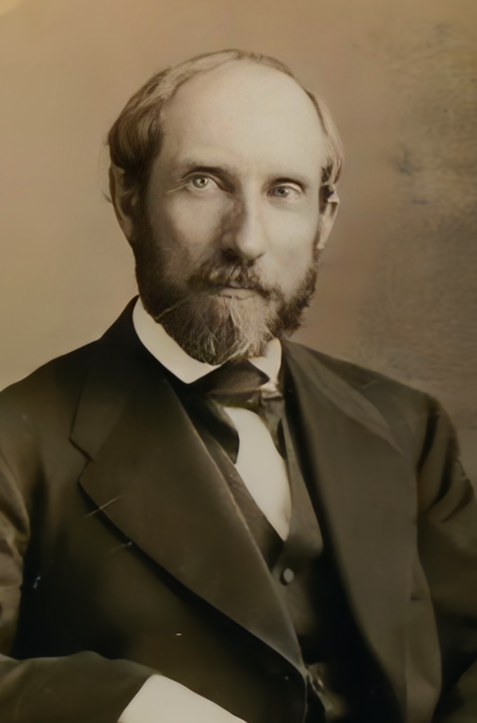
George Frederick Root was born on August 30, 1820, in Sheffield, Massachusetts. A composer, music educator, and publisher, Root helped shape nineteenth-century American musical life through instructional work, choral music, and a remarkable body of popular songs. In 1853, alongside Lowell Mason and William B. Bradbury, he helped establish the New York Normal Musical Institute, a pioneering program for the training of music teachers.
During the Civil War, Root became one of the North’s most important songwriters. His best-known work, “The Battle Cry of Freedom,” was published in 1862 after President Abraham Lincoln called for 300,000 additional volunteers for the Union Army. Its refrain—“The Union forever, hurrah! boys, hurrah!”—and its appeal for “three hundred thousand more” made it a powerful expression of Union patriotism, embraced by soldiers, civilians, and political organizers alike.
The song achieved exceptional popularity, with estimates placing its sheet-music circulation between 500,000 and 700,000 copies, and contemporary demand was so great that fourteen printing presses reportedly could not keep up. Composer Louis Moreau Gottschalk admired it deeply, writing in his diary that it “should be our national anthem,” and subsequently based his 1863 piano paraphrase Le Cri de délivrance, Op. 55, on Root’s melody, dedicating the work to him. The song also entered electoral politics, with adaptations promoting the Lincoln–Johnson ticket in the 1864 presidential campaign and James A. Garfield’s 1880 presidential run, while its massive cultural reach even extended into the Confederacy, where William H. Barnes and Hermann L. Schreiner produced a Southern adaptation set to Root’s recognizable tune. Root’s legacy shows how popular music could shape public feeling during the Civil War, giving Union supporters a shared language of resolve, sacrifice, emancipation, and national purpose.
