
Julian Alden Weir—widely known as J. Alden Weir—was born on August 30, 1852, at West Point, New York. The son of Robert Walter Weir, a prominent artist and drawing professor at the United States Military Academy, he grew up in an artistic household before studying at New York’s National Academy of Design and later in Paris at the École des Beaux-Arts.
Weir initially embraced academic training and was skeptical of the European avant-garde. Over time, however, he developed a more personal, Impressionist-inflected approach, using broken brushwork, tonal subtlety, and close observation to depict rural Connecticut, still lifes, and quiet domestic scenes. Rather than pursuing spectacle, many of his paintings create atmosphere through subdued color, natural light, and an attentiveness to ordinary experience.
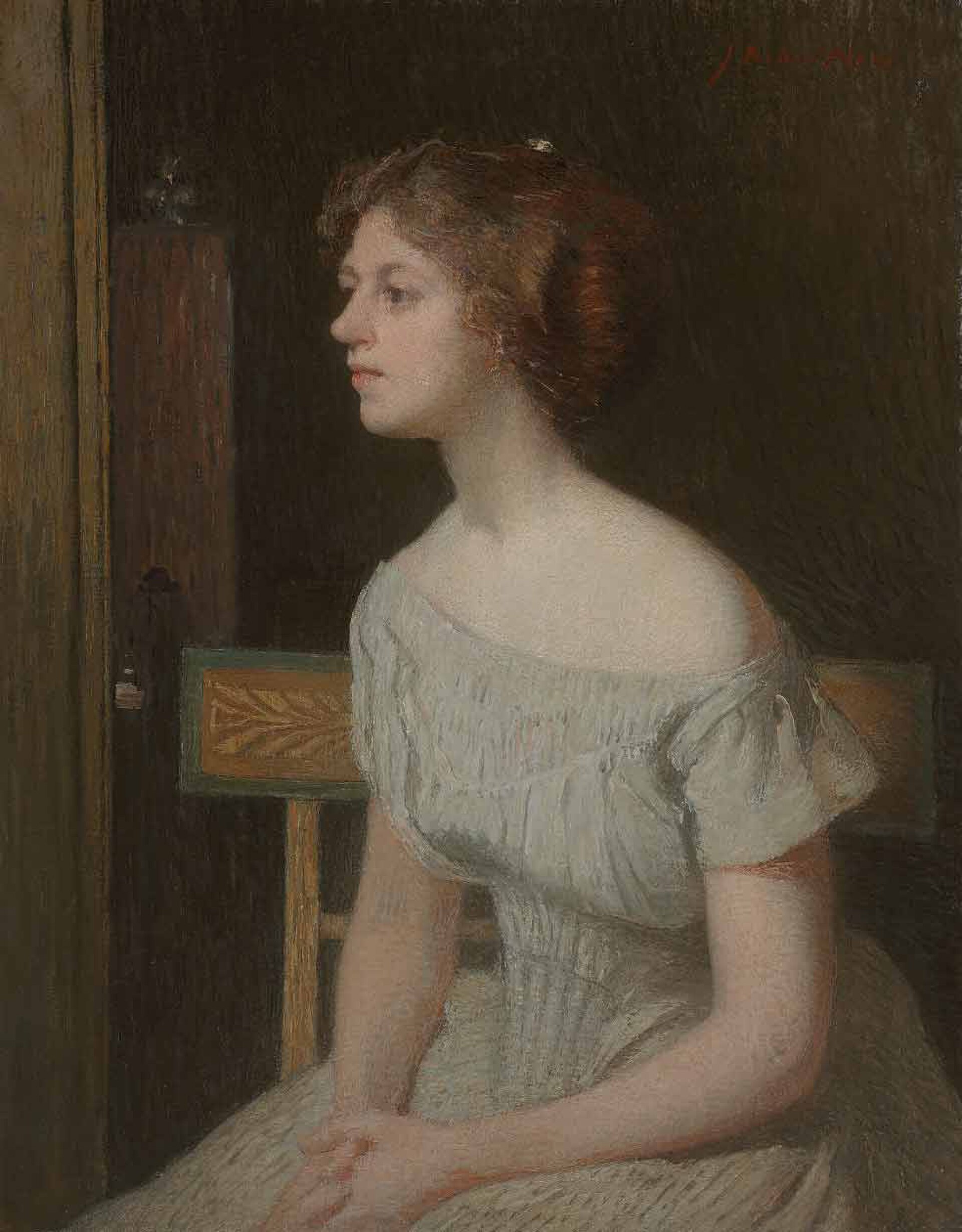
His work helped establish American Impressionism as a serious and distinctly local artistic language. A founding member of The Ten American Painters, Weir joined other artists in 1897 to break away from the Society of American Artists and advocate for a more independent exhibition culture. His 1895 painting The Red Bridge is among his most recognized works, while paintings such as Reverie (shown) reflect his interest in intimate solitary figures. Weir’s influence extended beyond his canvases; he taught for many years at institutions including Cooper Union and the Art Students League, held summer classes in Connecticut, turned his Branchville farm into an important gathering place for artists, and served as president of the National Academy of Design from 1915 to 1917. His birthday marks the arrival of an artist whose career traced a major shift in American painting: from European academic convention toward a quieter, more atmospheric vision rooted in everyday life and the American landscape.
Image: Julian Alden Weir, Reverie via Wikimedia Commons, public domain
