
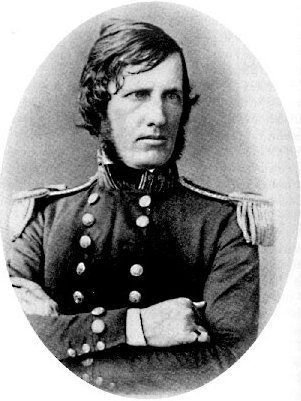
On August 28, 1867, Captain William Reynolds, commanding the steam sloop-of-war USS Lackawanna, formally took physical possession of the Midway Islands in the North Pacific Ocean on behalf of the United States government. Executing a disciplined military ceremony on the remote, unpopulated coral atolls, Reynolds raised the American flag and claimed the territory under the legal framework of the 1856 Guano Islands Act.
The strategic deployment served as a critical milestone in the post-Civil War expansion of American maritime statecraft and commercial shipping logistics. Reynolds, a highly proficient naval officer from Lancaster, Pennsylvania, recognized that the isolated islands possessed an invaluable deep-water lagoon that could easily be converted into a secure coaling station for transpacific merchant vessels and naval cruisers. By securing this remote geographic anchorage, the Lincoln-Johnson administration successfully extended the nation’s political and industrial influence deep into the Pacific theater, long before the acquisition of Hawaii or the Philippines.
The captain’s meticulous naval tracking logs provided Washington cartographers with the precise soundings and environmental data needed to build the territory’s first permanent navigational charts. Reynolds’ service reflected a deep family tradition of national sacrifice; he was the brother of Major General John F. Reynolds, the legendary infantry commander who had been killed four years earlier while leading the defense of Gettysburg. The 1867 claim remains a landmark chapter in the history of American geopolitics, marking the very first time the federal government successfully annexed an offshore territory beyond the continental boundaries of North America.
Image via Wikimedia Commons, public domain.
