
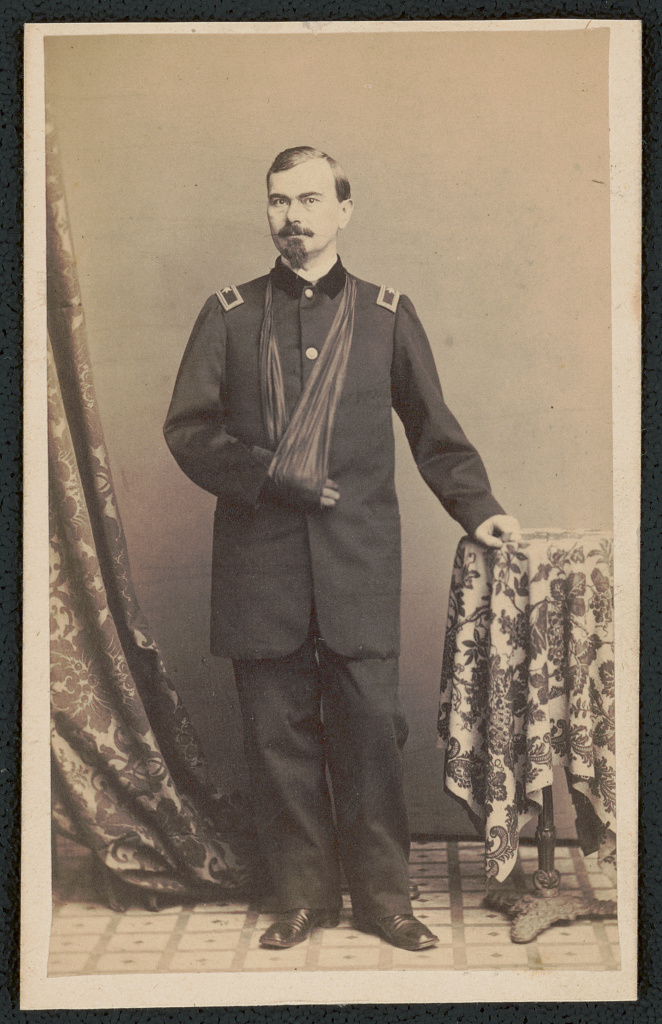
On August 28, 1861, Colonel Max Weber led amphibious Union infantry forces onto the beaches of the Outer Banks during the Battle of Hatteras Inlet Batteries. Born in Germany and trained at the military academy of Karlsruhe, Weber was a veteran of the failed European Revolutions of 1848 who had fled to New York, where he became a prominent leader among the city’s German-American immigrant community. His strategic assignment on the North Carolina coast aimed to capture Fort Hatteras, a vital Confederate stronghold that protected the inlet and shielded privateers raiding northern merchant fleets.
The landing operation on August 28th quickly descended into tactical confusion due to a critical breakdown in communications between the army and the navy. While attempting to take physical possession of Fort Hatteras after an intense naval bombardment, Weber and his men came under heavy, concentrated fire from their own Union warships, whose crews did not realize that the Confederate garrison had already vacated the outer works. Despite the terrifying threat of friendly fire and a rising coastal storm that cut off their reinforcements, Weber used his European tactical training to keep his shore units disciplined, successfully securing the fort and forcing a formal Confederate surrender the following day.
The decisive victory marked the first major Union success of the war, providing an invaluable boost to northern morale and establishing a permanent federal blockade base. Weber’s battlefield competence accelerated his military career, earning him a promotion to Brigadier General in September 1862 just before he was severely wounded while leading troops at Antietam. Following the war, Weber returned to Europe as a U.S. diplomat, serving as the American consul in Frankfurt and Nuremberg, where his long record of service reflected the global networks that shaped the Union’s wartime leadership.
Image: An archival portrait captures Union Brigadier General Max Weber posing with his arm in a sling following his later injury at Antietam. (Image via LOC, no known restrictions).
