
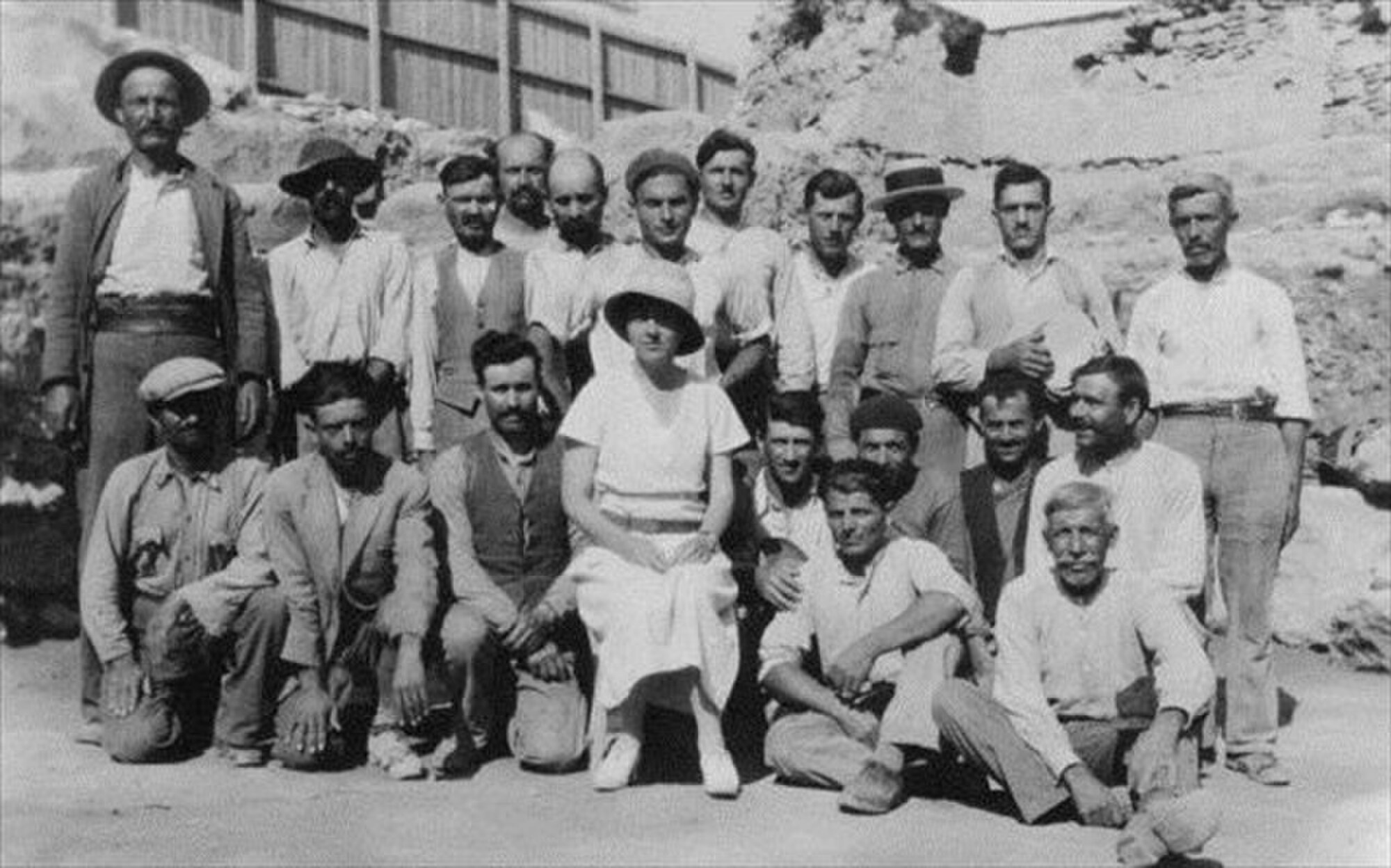
Dorothy Burr Thompson was born in Philadelphia on August 19, 1900—into a world she would later explore with both pen and trowel. Raised in a household steeped in law and literature, she became one of classical archaeology’s most lyrical and rigorous voices. Coming from a family of lawyers and writers, she would excavate gardens from antiquity, interpret Hellenistic terracottas, and be the first woman appointed to the Athenian Agora.
Thompson’s birth on August 19th introduced an absolute pioneer of classical studies whose meticulous fieldwork and sharp analytical mind single-handedly transformed the methodology of urban Mediterranean archaeology. When she was handed the historic assignment to supervise excavations at the Athenian Agora—the bustling, open-air plaza that had once served as the absolute civic and democratic heart of ancient Athens—she rejected crude treasure-hunting techniques in favor of a rigorous stratigraphic system that carefully mapped every layer of historical soil. Her work exposed the complex architectural foundations of early democracy, unearthing hundreds of Hellenistic terracotta figurines that provided an unprecedented look into the everyday religious and cultural lives of ordinary ancient citizens.
The absolute masterstroke of her career lay in her highly innovative creation of “archaeological botany,” a discipline she invented after discovering a series of mysterious, uniform holes carved directly into the solid rock surrounding the ancient Temple of Hephaestus. By carefully analyzing soil remnants and matching the patterns with obscure classical texts, Thompson proved that the ancient Greeks had cultivated a formal, symmetrical garden of laurel and pomegranate trees to shade the civic plaza centuries prior. Her work turned a barren, sun-bleached excavation ruin into a living museum, and her appointment as the very first female fellow of the Agora excavations permanently broke a massive glass ceiling, ensuring that future generations of female scholars could lead world-class environmental exploration.
Image: Archaeologist Dorothy Burr Thompson documents structural findings alongside her excavation crew at the Athenian Agora in the 1930s via Wikimedia Commons, public domain
