
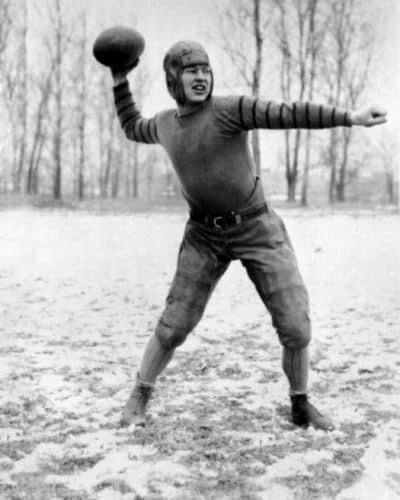
On August 11, 1919, a historic athletic partnership was forged in a small midwestern newspaper office when Curly Lambeau and George Whitney Calhoun co-founded the Green Bay Packers. Lambeau, a star football player, envisioned a highly competitive, professional gridiron squad capable of challenging the best teams in the region. However, the fledgling club faced an immediate, existential crisis common to early sports ventures: they possessed absolutely no capital to purchase uniforms, secure training equipment, or rent a playing field.
Desperate for financial backing, Lambeau turned to his primary employer, the Indian Packing Company, a local meatpacking enterprise where he worked as a shipping clerk. Lambeau successfully begged the company’s owner for a modest sponsorship of $500 to get the football venture off the ground and secure the necessary gear. The corporation agreed to fund the team under one non-negotiable condition: the athletic club had to be named directly after the business to provide continuous public relations advertising.
Thus, the “Packers” moniker was born, forever linking a professional sports franchise to the gritty blue-collar workforce of a midwestern packing plant. Against all financial odds, this small-town operation survived the collapse of early professional football leagues to become an enduring cornerstone of the National Football League. Today, they stand as a singular anomaly in modern corporate sports, remaining the only non-profit, entirely community-owned major professional sports franchise in the United States.
