
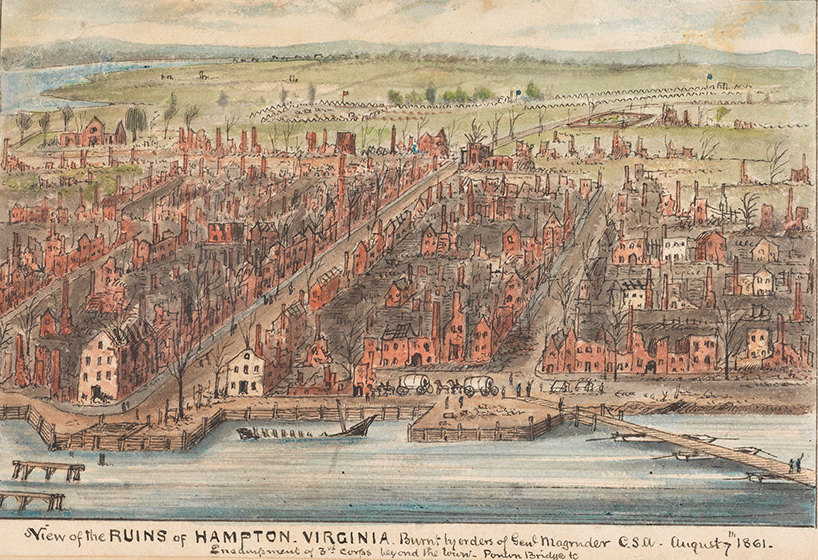
In the early hours of August 7, 1861, Confederate forces under General John B. Magruder set fire to the historic town of Hampton, Virginia, destroying more than 500 homes, churches, and businesses. The goal was starkly strategic: deny Union troops a defensible winter quarters and prevent the rapidly growing community of self‑emancipated people fleeing to nearby Fort Monroe from establishing a permanent foothold.
Months earlier, Union General Benjamin Butler had declared that enslaved people escaping to Union lines were “contraband of war” and would not be returned. Hampton quickly became a refuge for hundreds seeking freedom. Rather than allow the town to serve as a sanctuary for the formerly enslaved or a base for Union occupation, Confederate forces chose to erase it entirely. The burning of Hampton revealed, early in the conflict, that the Civil War would be fought not as a limited contest of armies but as a destructive struggle over land, labor, and the meaning of freedom itself.
