
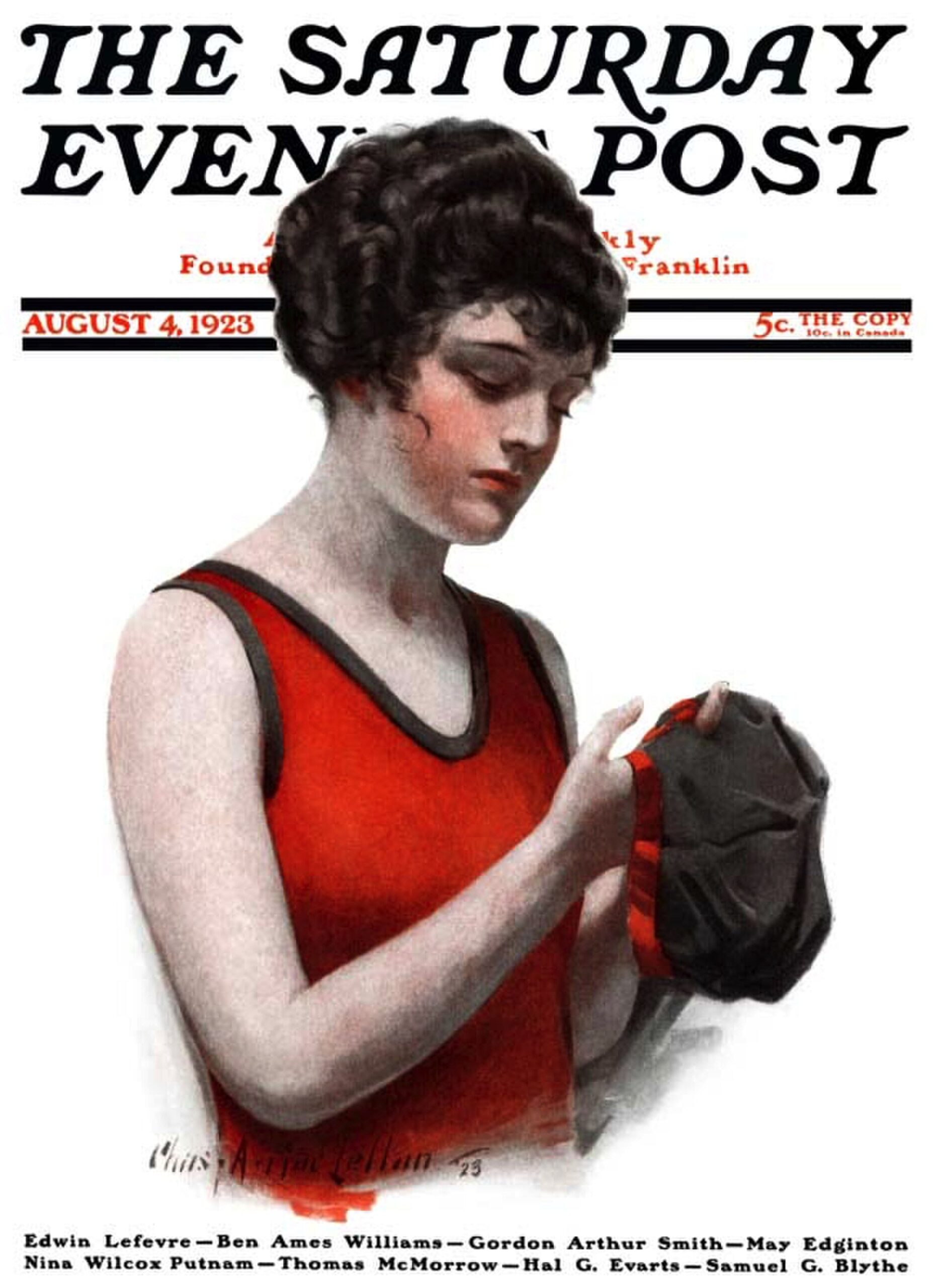
The August 4, 1923, cover of The Saturday Evening Post features an illustration by artist Charles A. MacLellan, who painted 44 memorable covers for the publication. This painting captures a young woman meticulously examining her swimming cap, embodying the burgeoning “flapper” beach culture of the Roaring Twenties. It arrived more than a century after the magazine’s historic debut on August 4, 1821, when its earliest predecessor appeared as a simple, unillustrated four‑page weekly newspaper in a modest Philadelphia printing shop.
The magazine’s lasting significance lies in its unparalleled role as a launching pad for iconic American visual storytelling and literature. During the golden age of print, the Post was delivered to millions of living rooms every single week, using its distinctive cover art to define the shifting ideals of the American Dream. It famously discovered and nurtured the genius of Norman Rockwell, who painted 323 distinct covers for the publication over a span of forty-seven years. The magazine also served as a literary powerhouse, introducing generations of ordinary citizens to the early writings of legendary American authors like F. Scott Fitzgerald, William Faulkner, and Ray Bradbury, permanently transforming the landscape of American journalism and pop culture.
This specific 1923 issue also hit newsstands during a week of profound national grief and sudden political transition. Just one day prior, on August 3, 1923, Vice President Calvin Coolidge had been sworn into office in the middle of the night following the sudden death of President Warren G. Harding. Millions of Americans who purchased this exact August 4th issue for its lighthearted summer cover did so with heavy hearts, turning a simple 5-cent magazine into an unintended time capsule of a nation pivoting into a brand-new political era.