
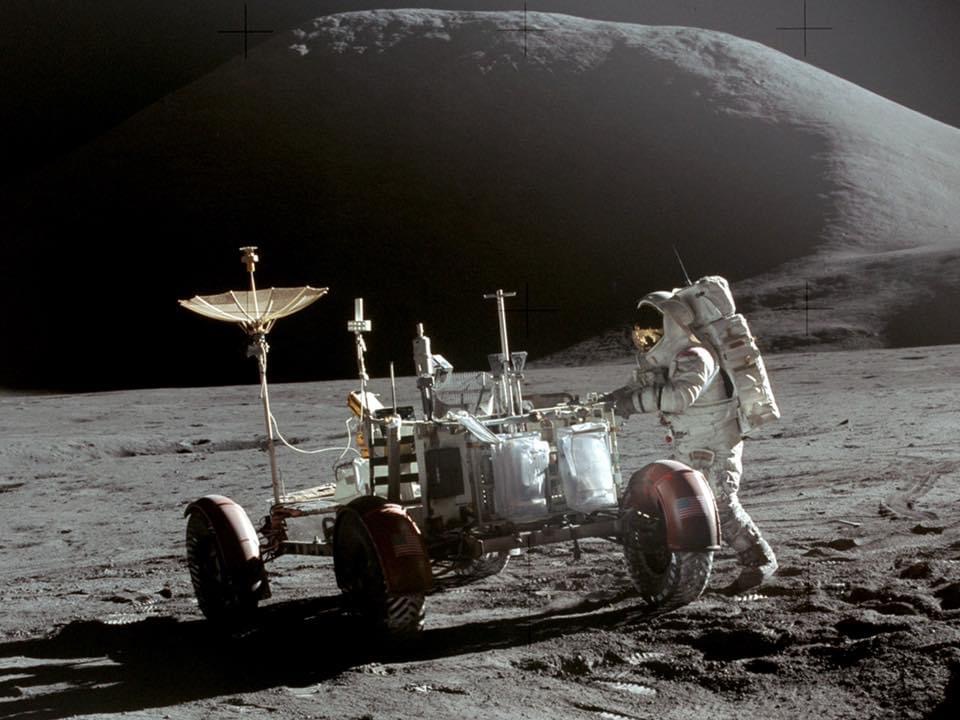
July 31, 1971, was the first time that a lunar roving vehicle was driven by American astronauts on the moon. It was driven by Apollo 15 Astronauts David Scott & James Irwin. This mission represented a massive leap forward in space exploration, allowing astronauts to travel much further from their lunar lander than ever before. Driving across the dusty terrain, Scott and Irwin explored distant craters and mountain slopes, collecting invaluable geological samples that helped scientists understand the early history of our solar system, their tracks in the lunar soil symbolizing a bold expansion of human horizons.
Looking back at the distant Earth from the silent lunar plains, the astronauts experienced a profound sense of isolation and wonder, an existential shift felt deep in the chest. This journey required incredible technical skill and bravery, testing the absolute limits of human ingenuity and life-support technology. Their successful exploration demonstrated that humanity could adapt and thrive in the most hostile environments, leaving an inspiring legacy for future generations of explorers who dream of navigating the stars.
