
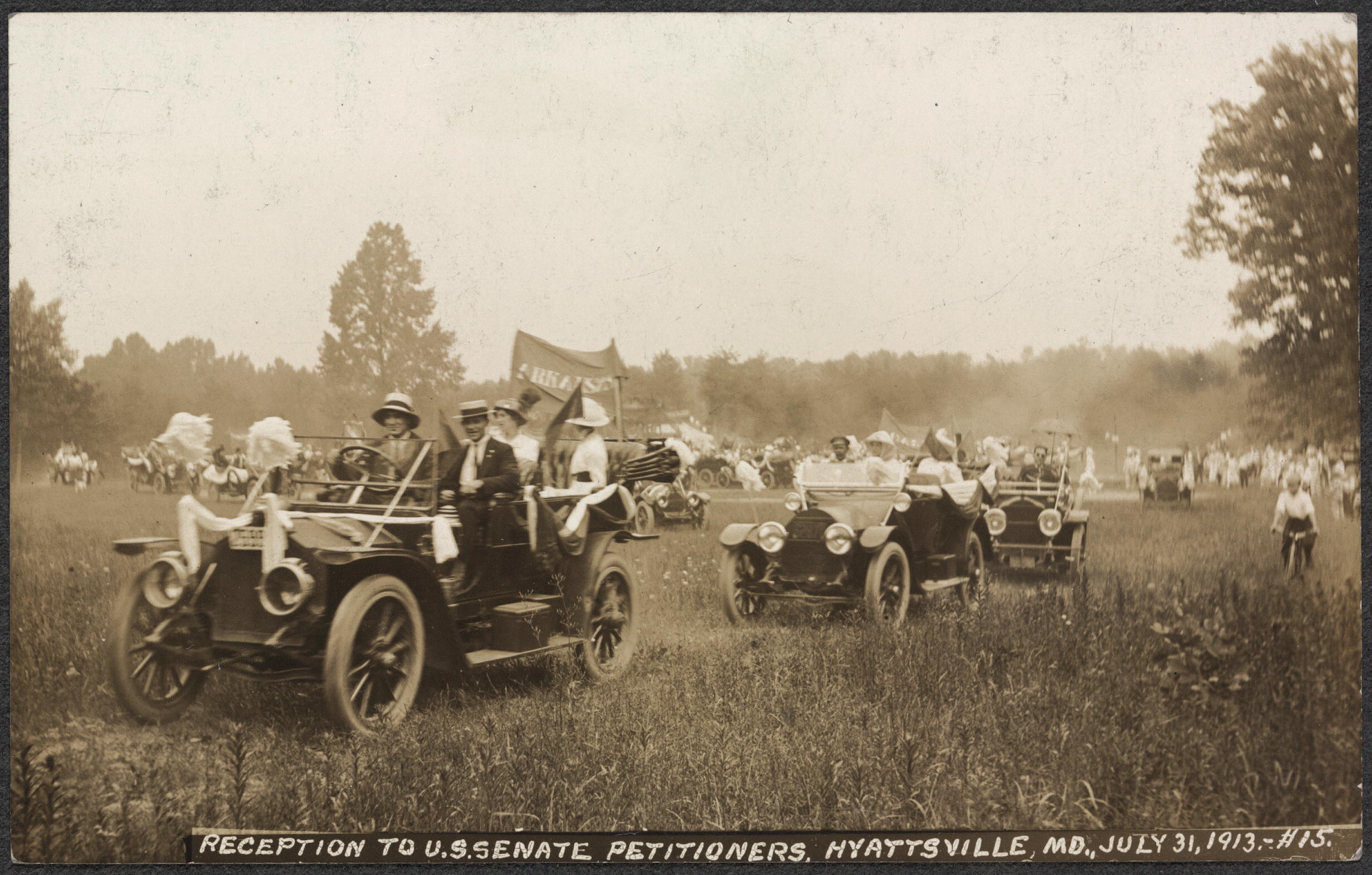
On July 31, 1913, a motorcade of sixty decorated automobiles rolled from Hyattsville, Maryland, to the U.S. Capitol—not on foot or horseback, but in the vanguard of the 20th century. Their mission: to deliver some 85,000 signatures on petitions demanding a constitutional amendment for woman suffrage, gathered from citizens in all 48 states. This procession was a carefully staged spectacle, designed to seize public attention and reframe the suffrage movement as modern, organized, and inevitable.
The mechanical roar of engines down Pennsylvania Avenue served as an audible declaration: the push for equality could no longer be sidelined. At its core lay a demand to remedy a foundational contradiction in American democracy—women, long tasked with upholding the nation’s moral and domestic life, were barred from shaping the laws that governed them. By presenting these petitions directly to the Senate, with Alice Paul leading the convoy and senators like George Chamberlain and Robert Owen welcoming them at the Capitol, suffragists insisted that democratic principles must finally extend to all citizens.
