
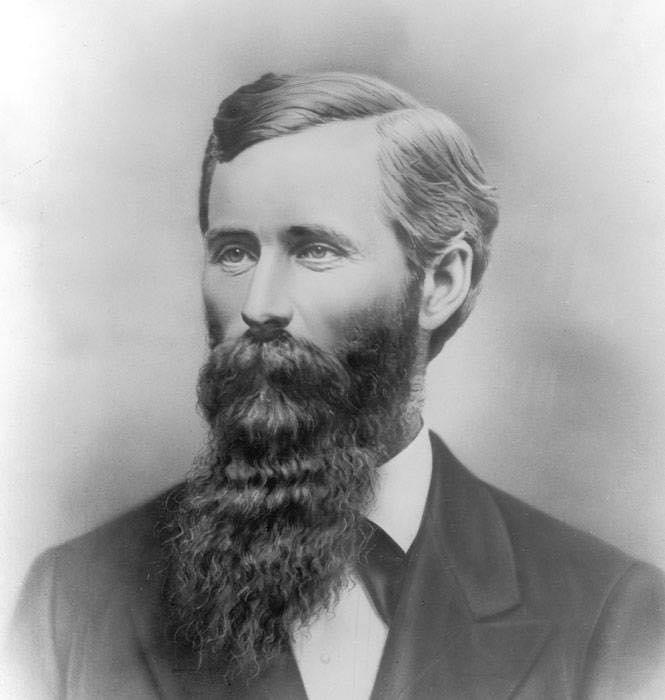
The life of George Lemuel Woods, born in Boone County, Missouri, on July 30, 1832, reflects the restless, seeking spirit of the 19th-century American West. Serving as both the Governor of Oregon and the Territory of Utah, Woods navigated fiercely divided populations defined by bitter political and religious conflicts. Amid the chaos of territorial governance, Woods’ heart was anchored by a singular, passionate belief: true human liberation and social stability could only be achieved through public education.
In his 1874 address to the Legislative Assembly of Utah, Woods argued that a society’s safety is directly tied to its intelligence, asserting that where education is universal, life, liberty, and property are secure. He understood that a schoolhouse is a place where a child’s character is shaped and nurtured. To achieve this, he championed the creation of “Normal Schools”—institutions designed to train teachers in the art of instruction—believing that an uneducated teacher was a disservice to a child’s potential.
Woods’ crusade for public education was an effort to bring order and compassion to a chaotic frontier. He viewed the classroom as a vital democratic space where children from all backgrounds could learn empathy and mutual respect. His legacy reminds us that institutional systems of education are fundamentally acts of hope, built to ensure that the intellect of the next generation is prepared to meet the challenges of an ever-changing world.
