
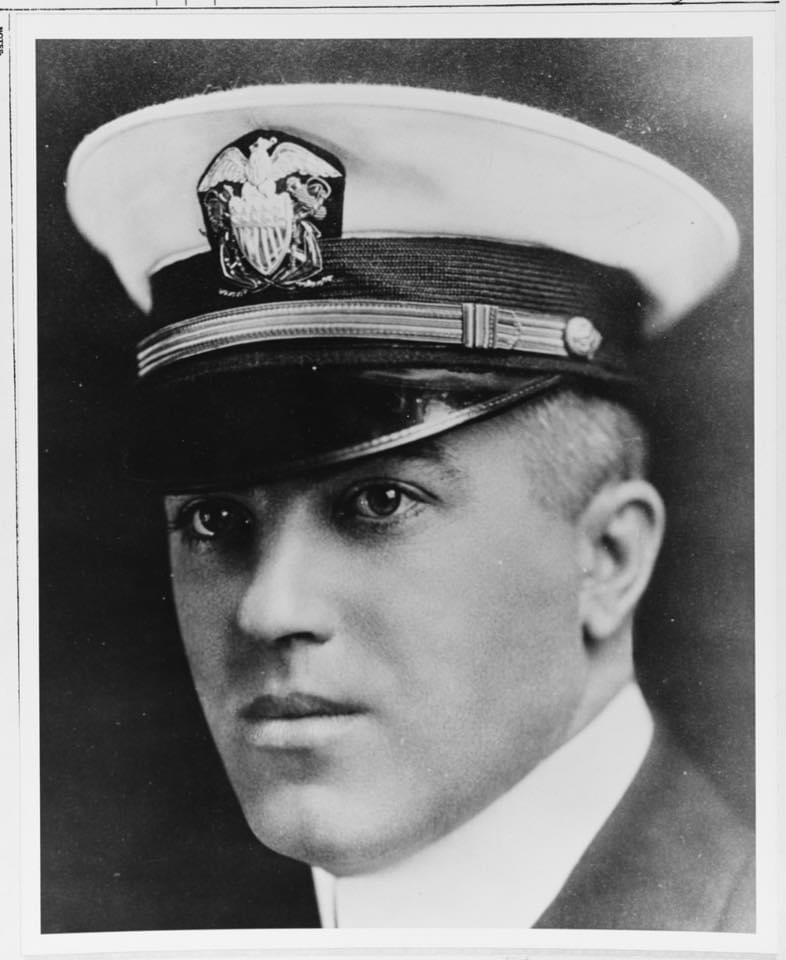
On July 26, 1890, Daniel Judson Callaghan was born in San Francisco, California, beginning a naval life shaped by discipline, faith, and an unwavering sense of duty. From his early years at the U.S. Naval Academy through his service in World War I, Callaghan developed a reputation for steadiness under pressure and a meticulous approach to command. His tenure as naval aide to President Franklin D. Roosevelt further broadened his strategic understanding, giving him a front‑row view of global naval policy as the world edged toward another catastrophic conflict.
By the time World War II erupted, Callaghan’s combination of moral seriousness and operational competence placed him at the center of America’s desperate fight for control of the Solomon Islands. In the fall of 1942, he was given command of a small, battered task force charged with defending Henderson Field — the airstrip whose survival determined the fate of Guadalcanal.
That responsibility brought him face‑to‑face with the Japanese battleship Hiei, a towering Kongo‑class warship whose 14‑inch guns could level Henderson Field in minutes. On the night of November 13, 1942, Callaghan led his cruisers and destroyers into the darkness north of Savo Island, where radar contacts flickered and the enemy formation emerged like a wall of steel. With no time, no visibility, and no material advantage, Callaghan made the fateful decision to close the range and drive his ships directly toward Hiei.
The battle that followed was a brutal, point‑blank melee — searchlights stabbing through the blackness, tracers arcing across the water, and American destroyers firing torpedoes at ranges so short they could see the battleship’s silhouette against the night sky. USS San Francisco, Callaghan’s flagship, crossed directly in front of Hiei, trading fire with a battleship at distances reminiscent of the age of sail.
A Japanese salvo tore through the bridge of San Francisco, killing Callaghan instantly. Yet the ferocity of the American attack — launched under his direction — crippled Hiei, shattered the Japanese formation, and prevented the bombardment of Henderson Field. For his leadership and sacrifice, Callaghan was posthumously awarded the Medal of Honor, his life defined by the same principle that guided his final command: duty carried out without hesitation, even when the path led straight into the guns of the enemy’s most powerful ship.
