
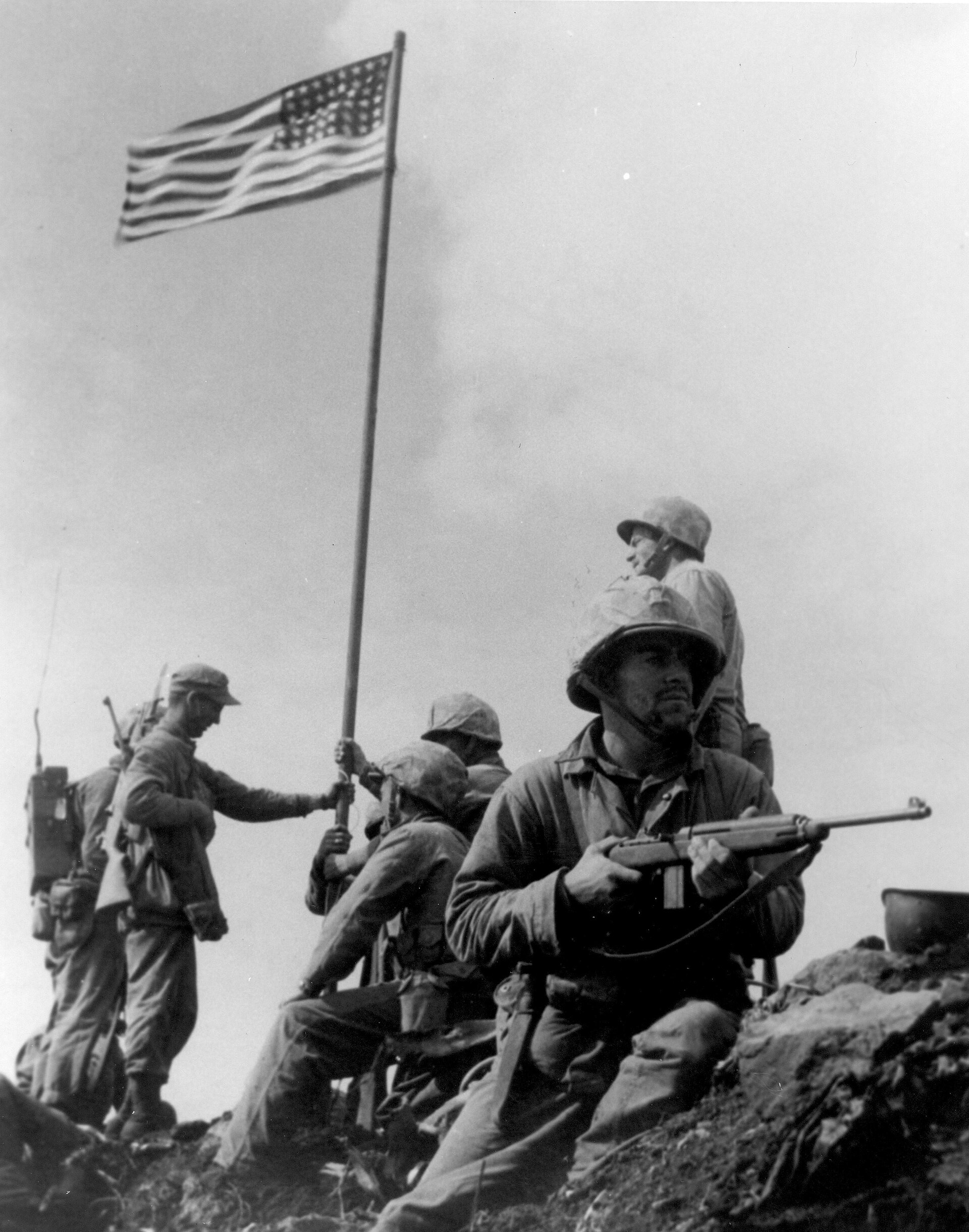
On July 24, 1916, Marine Corps photographer Louis Lowery was born — a man destined to capture one of the most authentic, yet frequently overshadowed, images of World War II. On the brutal, ash‑choked slopes of Mount Suribachi during the Battle of Iwo Jima, Lowery climbed with a frontline combat patrol and photographed the very first American flag raised over the mountain. His images were raw and immediate, taken under direct enemy fire, the kind of photographs that can only be made by someone standing in the blast radius of history. Moments after securing the shot, an enemy grenade detonated at his feet. Lowery survived by instinctively rolling down the side of a crater, but the violent fall shattered his camera equipment completely, ending his ability to document the rest of the day’s events.
Because his camera was destroyed, Lowery was absent when commanders ordered a second, much larger flag to be raised so it could be seen by the naval fleet fighting miles offshore. Associated Press photographer Joe Rosenthal captured that second moment, producing the compositionally perfect image that became an international symbol of the Pacific War. Lowery’s true legacy is not a “lost” flag, but a testament to the split‑second fragility of historical documentation. His story reveals a deeper truth: public memory gravitates toward polished symbols of triumph, but the authentic threshold of victory — the dirt, dust, fear, and flying shrapnel of the first hour — belongs to individuals like Lowery, who risked everything to record history before it knew it was history.
