
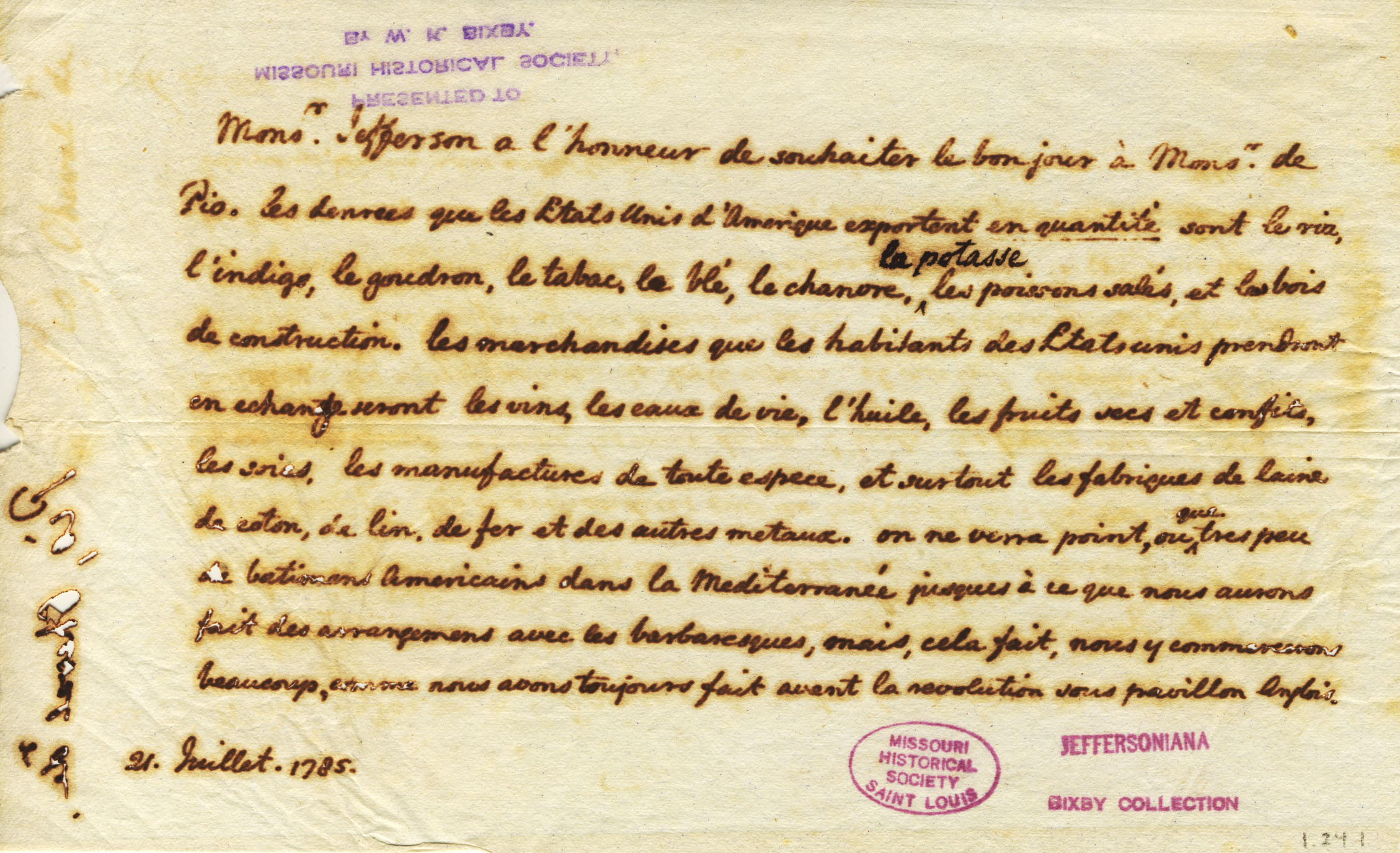
On July 21, 1785, Thomas Jefferson—serving as U.S. Minister Plenipotentiary to France—replied in fluent French to Neapolitan diplomat M. de Pio with a detailed accounting of American exports like rice, tobacco, and indigo. More than a simple trade list, Jefferson’s letter was part of a deliberate campaign to position the young United States as a serious commercial power in the Mediterranean world.
Fresh from independence and still economically fragile, Jefferson used diplomacy to cultivate new markets, weaken British dominance, and gather intelligence on European agricultural methods. He quietly shipped improved seed varieties back home, believing that economic strength was the true foundation of American sovereignty.
His outreach to southern Europe helped lay the groundwork for America’s maritime expansion—an ambition soon tested by North African piracy, European blockades, and the struggle to secure American shipping rights abroad.
