
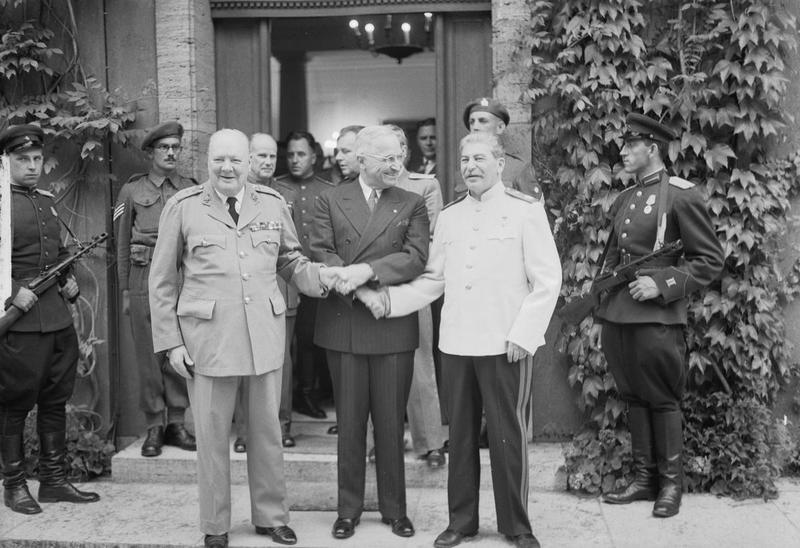
On July 17, 1945, the Potsdam Conference opened in occupied Germany as President Harry S. Truman, British Prime Minister Winston Churchill, and Soviet Premier Joseph Stalin met to shape the postwar world. Truman had spent the previous week crossing the Atlantic aboard the heavy cruiser USS Augusta, studying classified intelligence to prepare for the summit.
On the eve of the conference, Truman received a coded telegram reporting that New Mexico’s top-secret “Trinity” atomic test was a total success. Armed with this world-altering knowledge, Truman shifted his diplomatic posture, preparing to adopt a sharper, more unyielding tone against Soviet expansionist demands. His private awareness of America’s nuclear capability effectively fired one of the earliest rhetorical salvos of the Cold War.
The unspoken tension was that Stalin already knew about the atomic test through Soviet espionage. While Truman believed he held a secret advantage, Stalin’s intelligence network had informed him of the project’s progress. This silent knowledge set the stage for a psychological duel at Potsdam, where both leaders maneuvered with secrets they pretended not to know.
