
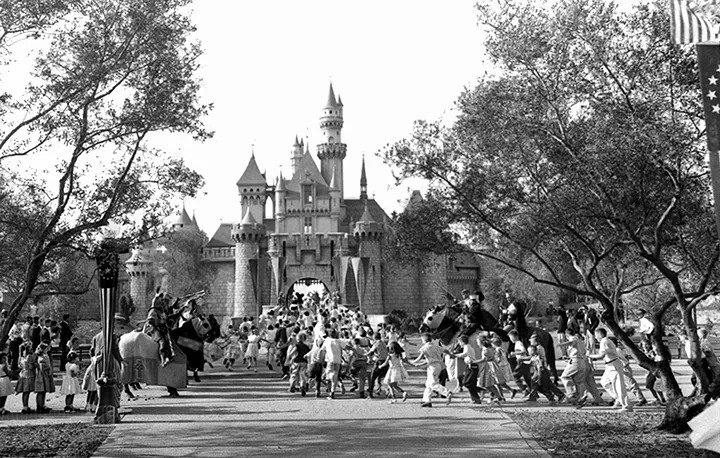
On July 17, 1955, Disneyland opened its gates in Anaheim, California, broadcasting its grand debut live on ABC to more than 90 million viewers. Archival images show horse‑drawn stagecoaches rolling down Main Street, presenting Walt Disney’s vision of wholesome Americana.
Behind the scenes, the day was a disaster. Counterfeit tickets flooded the area, swelling attendance to over 28,000 and causing miles‑long traffic jams. Triple‑digit heat softened the freshly poured asphalt, trapping women’s high‑heeled shoes. A plumbers’ strike during construction had forced Disney to prioritize working bathrooms over drinking fountains, leaving guests parched. Ride breakdowns and gas leaks compounded the chaos. Disney executives quietly dubbed the day “Black Sunday,” even as the park became an enduring cultural icon.
Yet the chaos of opening day ultimately strengthened Disneyland rather than sinking it. Within hours, crews stabilized attractions, added emergency water stations, and reorganized crowd flow, allowing the park to operate normally by mid‑week. The disaster forced Disney to refine training, maintenance schedules, and operational planning, creating the logistical discipline that would define every future Disney park. What began as “Black Sunday” became the crucible that forged the modern theme‑park playbook.
Image: Disneyland on opening day via Wikimedia Commons, public domain
