
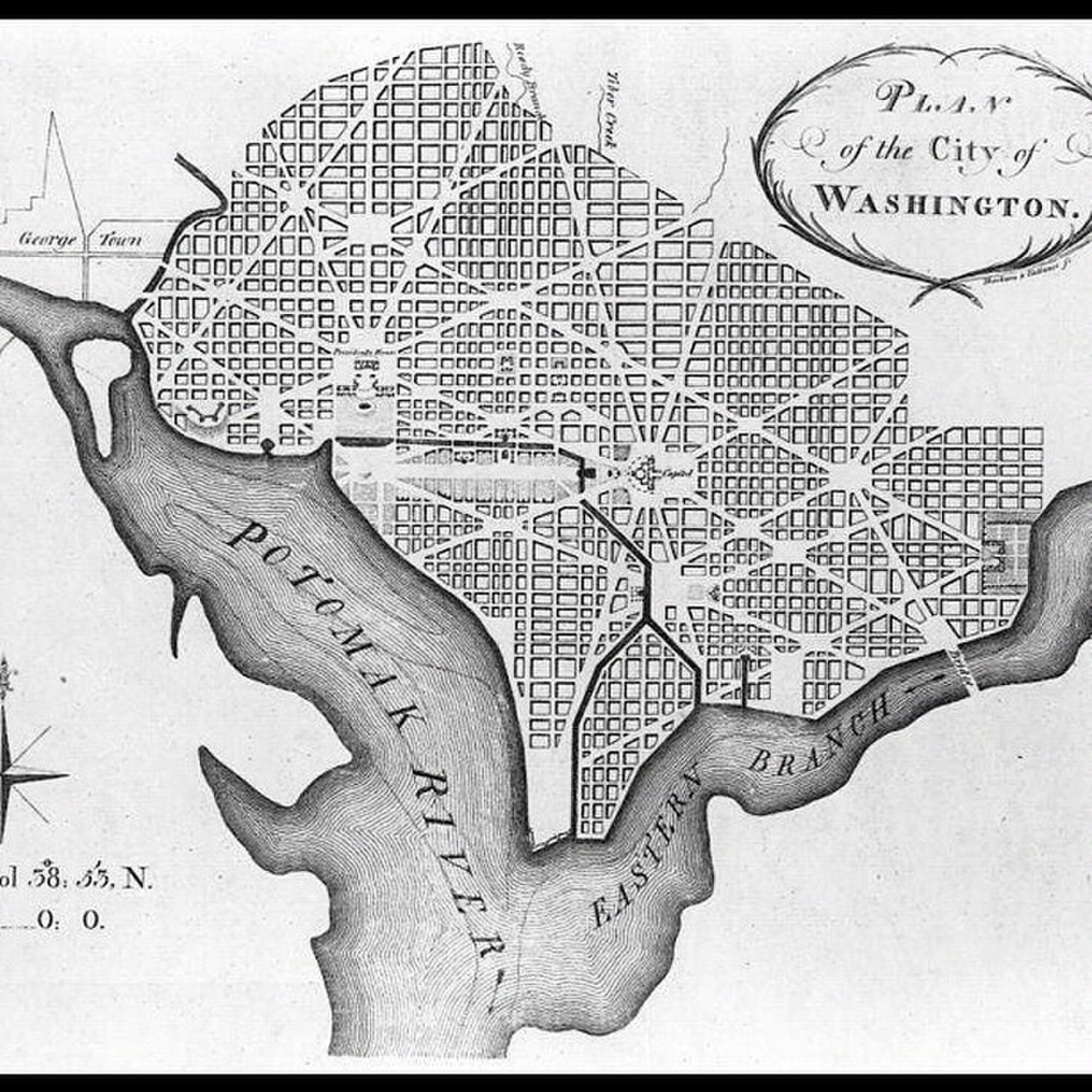
On July 16, 1790, President George Washington signed the landmark Residence Act, fixing the permanent seat of the federal government along the Potomac River. The legislation emerged from the famous dinner-table compromise between Thomas Jefferson, Alexander Hamilton, and James Madison, trading Southern support for Hamilton’s debt assumption plan in exchange for placing the capital in the South.
A lesser‑known dimension of the decision was Washington’s personal familiarity with — and interest in — the Potomac region. He owned property in the Virginia portion of the future District and had long championed the river as a commercial artery. While he did not hold land inside the federal core itself, his involvement in selecting the precise boundaries reflected both his practical knowledge of the terrain and his desire to see the new capital thrive near Mount Vernon. Historians continue to debate the extent to which the final placement offered him any direct financial benefit, but his influence over the site’s development is unmistakable.
Image: Wikimedia Commons, no known restrictions
